

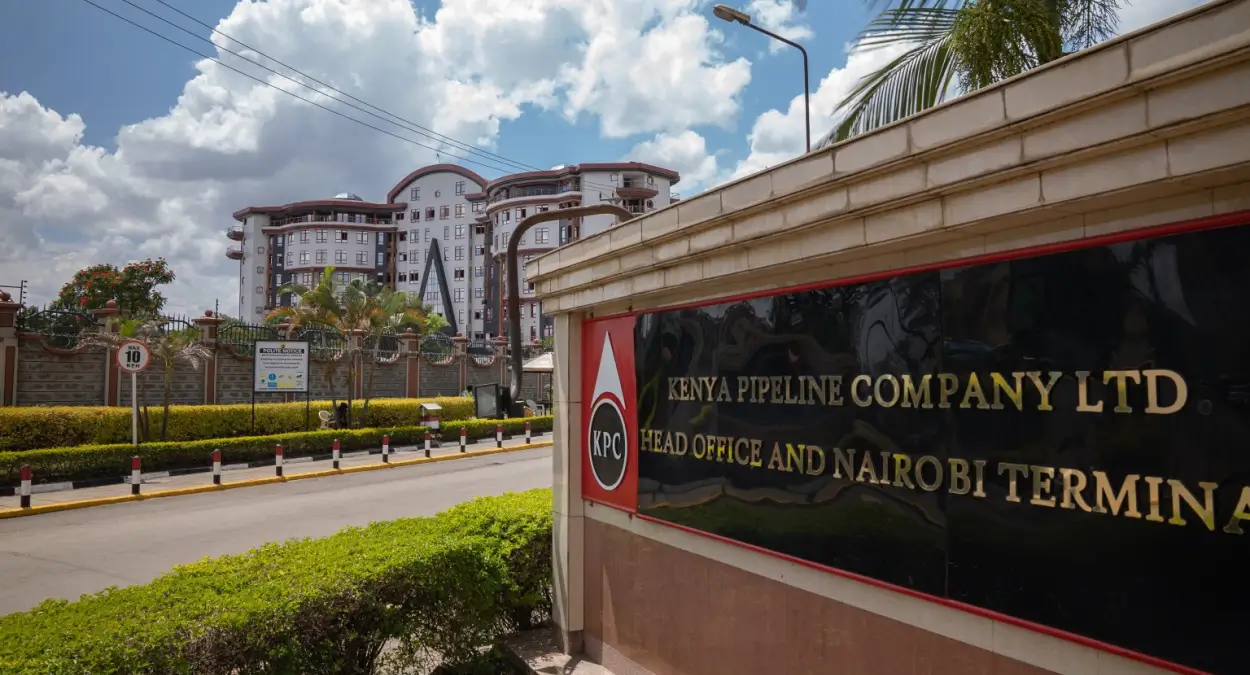
Few topics in Kenya’s capital markets have sparked as much debate as the Kenya Pipeline Company Valuation. Depending on who you ask, KPC is either being valued too cheaply or priced too aggressively.
But valuation is not about emotion, public pressure, or political expectations. It is a structured, regulated, and professional process. And to understand KPC’s valuation, one must first step back and ask a more fundamental question: How do you value a company like KPC in the first place? Here are some insights from Faida Investment Bank Lead Transaction Advisor, Dr Belgrad Kenne:
At its core, valuation is guided by three universally accepted approaches:
- Asset-based valuation – what the company owns
- Income-based valuation – what the company earns and is expected to earn
- Market-based valuation – how similar companies are priced
Also read: Why Goverment of Kenya Launched KPC IPO
Every credible valuation exercise considers all three. The difference lies in which method carries more weight, and that depends entirely on the nature of the business being valued. And for KPC, this distinction is critical.
Kenya Pipeline Company Valuation of Asset
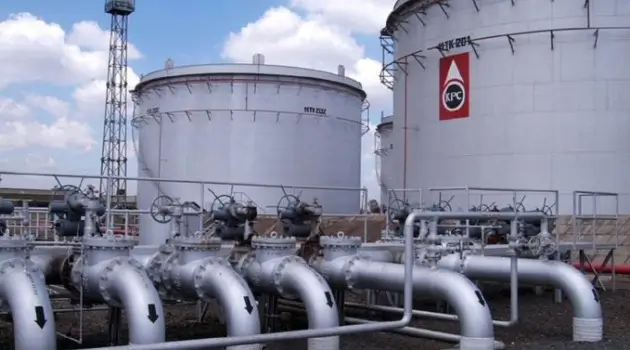
As part of the IPO preparation, KPC underwent a comprehensive fixed-asset valuation. A professional valuer assessed land, pipelines, depots, storage facilities, and infrastructure across the country. The outcome was that Total fixed asset valuation of approximately Ksh 124 billion But asset valuation answers only one question: What would this business be worth if it stopped operating?
KPC is not a dormant asset. It is highly profitable, operating like a natural monopoly. Valuing it purely on assets would be equivalent to pricing an income-generating business as if it were being liquidated. Asset value therefore provides a floor, not a fair price.
Also read: Understanding why privatization of KPC was important
Understanding the Balance Sheet:
Another area that has attracted confusion on Kenya Pipeline company valuation is KPC’s debt position. While earlier disclosures reflected group-level borrowings due to the consolidation of Kenya Petroleum Refineries Limited (KPRL), the reality today is materially different. Standalone KPC has no borrowings. Government loans extended to KPRL were converted into equity. Other facilities have been settled or significantly reduced
Today, KPC operates with minimal effective debt of approximately Ksh 480 million and Cash balances of around Ksh 15 billion
Why Income Matters More Than Assets for KPC
Kenya Pipeline Company is best understood not as a collection of pipes and land, but as a cash-generating infrastructure business. Projected financials tell a clear story with revenue at approximately Ksh 41 billion and net profit at about Ksh 9.6 billion
That implies a net margin of about 23% which is an exceptionally high margin by local market standards. To put this into perspective, KPC’s net margin is comparable to the EBITDA margin of some listed utilities. This alone signals that earnings power, not book value, should drive valuation.
Why Price-to-Book Falls Short
Price-to-book is a popular metric in Kenya, but it is not universally applicable especialy if you look at the Kenya Pipeline Company valuation. Yes, it works well for banks and insurance companies. In those sectors, assets directly drive profitability. But KPC is a capital-intensive infrastructure business with long-life assets that are depreciated conservatively under accounting standards.
Pipelines with economic lives of 40 years may be depreciated over much shorter periods, artificially depressing book value while cash flows remain strong. Using price-to-book in this context would punish efficiency and ignore economic reality.
Should we do market comparative analysis?
Much of the public debate has relied on comparisons with KPLC and KenGen. These comparisons are convenient but analytically weak, according to Faida Investment Bank Lead Transaction Advisor Dr Belgrad Kenne. While all three are often labelled “utilities,” their economics differ fundamentally. KPC operates a pipeline monopoly with predictable throughput. Revenue is tariff-based with high visibility. Costs are largely fixed and predictable. Margins are structurally high
In contrast, power utilities face political and regulatory tariff interventions, volatile cost structures, weaker margins and governance complexities. Pipeline businesses behave more like infrastructure annuities than traditional utilities. Once the pipe is in the ground, cash flows become stable and forecastable.
Why EV/EBITDA Was the Logical Choice
Given KPC’s characteristics, EV/EBITDA emerges as the most appropriate valuation metric. EV/EBITDA removes distortions caused by depreciation policies, neutralizes differences in capital structure, focuses on operating performance and cash generation. This is especially relevant for Kenya Pipeline Company valuation because depreciation materially understates economic value, tax timing differences exist due to revaluations. The business is also effectively debt-free. For capital-intensive infrastructure globally, EV/EBITDA is standard practice.

Risk and Monopoly Power in the Kenya Pipeline Company Valuation
Two additional factors strengthen the valuation case:
First, monopoly economics. Pipeline infrastructure is a natural monopoly. Duplicating it is economically irrational, which provides long-term competitive protection.
Second, lower business risk. With predictable demand, stable margins, and a clear dividend policy (around a 50% payout ratio), KPC exhibits lower volatility than many listed companies.
The real debate is not whether KPC is “cheap” or “expensive.” The real question is whether the right valuation framework was used, for the right type of business, using the right global benchmarks. When viewed through that lens, KPC’s valuation is the outcome of asset validation, earnings analysis, cash-flow focus, and disciplined methodology.
#Valuation 101 #Kenya Pipeline Company Valuation

CEO & Co-Founder, Abojani Investment
Robert Ochieng is a visionary entrepreneur and the co-founder of Abojani Investment, a leading financial education platform in Kenya that has empowered over 20,000 Africans to embark on their investment journeys. As CEO, he has demonstrated an unwavering commitment to financial literacy, successfully demystifying money and investments and making them accessible and relevant to individuals from all walks of life.
Running Thriving Investment Communities
Robert’s influence extends well beyond Abojani Investment’s core offerings. He has actively fostered a sense of community by running investment forums and groups with a vast following of over 300,000 Africans. These communities provide a safe space for individuals to exchange ideas, share experiences, and support each other on their investment journeys.
Vision for the Future
As co-founder of Abojani Investment, Robert envisions a financially empowered Africa. He strives to expand the reach of his financial education initiatives, enabling millions more to gain the knowledge and confidence needed to achieve their financial goals. His vision is to create a society where every individual has the tools and understanding to build lasting wealth and prosperity.
Professional Background
Robert Ochieng is a highly accomplished CEO at the helm of Abojani Investment, an investment and advisory firm in Kenya. He is a seasoned professional with over 14 years of experience in IT, Finance, and leadership.
His career includes key roles at prominent institutions such as Equity Bank, Gulf African Bank, Guaranty Trust Bank (GTBank) and Airtel.
Robert’s expertise has also been sought after by the National Treasury for consultancy on planning and budgeting systems, showcasing his exceptional knowledge and skills in the field. Passionate about driving meaningful conversations and collaborations between academia, industry, and the public sector, Robert actively engages in research projects focusing on digital transformation within the financial services sector. With his visionary leadership and strategic insights, Robert Ochieng continues to make a significant impact in the business world.