
Once the KSh 244.5 billion transaction is done, and the shareholding structure has changed, you may ask, Now what? What does majority Vodacom ownership mean for Safaricom’s trajectory over the next 5-10 years?
1. Ethiopia Acceleration
Safaricom entered Ethiopia in 2022, one of Africa’s last major telecom markets to open up. The market potential is enormous: 120 million people, mostly unconnected.
But the early years have been capital-intensive, as the Ethiopian operation has been building network coverage and subscriber base. That’s expected for market entry of this scale, but it creates pressure.
Vodacom operates in eight African markets: South Africa, Tanzania, Mozambique, DRC, Lesotho, eSwatini, and (through minority stakes) Kenya and Ethiopia. They understand multi-country operations, regulatory complexity, and long-term infrastructure investment.
Also read: Vodafone to Acquire 15% Safaricom Plc Stake from the Government of Kenya
With majority control, Vodacom can:
- Commit longer-term capital to Ethiopian expansion without shareholder friction
- Share operational playbooks from successful market entries in Tanzania and Mozambique
- Leverage group-level relationships with equipment vendors for better pricing
- Apply lessons from DRC (similar complexity, large population) to Ethiopian strategy
The Ethiopia bet gets more credible with a majority shareholder who has the capital reserves and patience to see it through the loss-making early years.
If Safaricom captures even 30-40% of Ethiopia’s market over the next decade, the revenue potential will more than justify the early losses. Vodacom’s premium payment suggests they believe this timeline is achievable.
2. M-PESA Goes Continental
M-PESA is the crown jewel. Over 43 million users in Kenya, processing billions of shillings daily, embedded in the country’s economic infrastructure.
But M-PESA’s continental expansion has been slower than expected. Attempts to replicate Kenya’s success in other markets have had mixed results. Tanzania’s M-PESA works, but hasn’t achieved Kenya-level dominance. Other markets have been harder.
What changes under Vodacom majority ownership:
Vodacom already operates M-PESA in Tanzania through Vodacom Tanzania. They operate mobile money services in Mozambique, DRC, Lesotho, and South Africa (VodaPay). They understand the regulatory frameworks, partnership requirements, and local market dynamics across these countries.
Each market has unique regulatory requirements, competitive dynamics, and consumer behaviors. But the structural barriers to M-PESA expansion decrease when Vodacom can drive strategy across its entire African footprint.
If M-PESA scales across Vodacom’s markets, representing over 350 million people, the platform’s network effects compound dramatically. More users mean more merchants, more use cases, more transaction volume, and ultimately, more revenue.
3. Infrastructure Investment Gets Easier
Safaricom is executing a massive infrastructure modernization:
- Replacing diesel-powered base stations with solar and battery systems
- Upgrading to energy-efficient transmission equipment
- Expanding fiber optic network coverage
- Deploying 5G infrastructure
The KSh 40 billion DMTN programme can support part of this. But infrastructure investment is never-ending. Networks need constant upgrades to handle growing data demand, new technologies, and coverage expansion.
Vodacom Group’s current market capitalization is approximately $18 billion (February 2026). They generated an annual revenue of over $8 billion across their operations in 2025. That financial scale provides:
- Lower cost of capital: They can borrow at better rates than when alone
- Equipment negotiation leverage: Buying for eight markets gets better pricing than buying for one
- Technology sharing: Successful infrastructure deployments in one market can be replicated
- Risk diversification: Cash flows from mature South African market can subsidize growth investments in Kenya/Ethiopia
For capital-intensive projects, having a well-capitalized majority shareholder reduces financing constraints.
4. The Fintech Platform Play
Safaricom is increasingly a fintech company that happens to own telecom infrastructure. M-PESA generates significant revenue and profit. Financial services, like lending through Fuliza and M-Shwari, savings, insurance partnerships… are growing faster than traditional telecom services.
The M-PESA Fintech 2.0 platform upgrade positions Safaricom to compete not just with mobile money services, but with traditional banks. The cloud-native, microservices architecture with embedded AI enables:
- Faster product launches
- Better fraud detection
- Personalized financial services
- Real-time credit scoring
- Embedded finance for merchants
What Vodacom’s ownership might accelerate:
Global fintech investors value platforms with scale, network effects, and sticky users. M-PESA has all three in Kenya. But investors value continental scale even more.
If Vodacom consolidates mobile money operations across its markets under M-PESA branding and technology:
- Platform economics improve (one infrastructure serving 300+ million potential users)
- Valuation multiples increase (regional fintech platforms get higher valuations than single-country telecoms)
- Strategic options expand (potential fintech spinoff, strategic partnerships, or even separate listing)
Vodacom’s 2021 commitment to transform Safaricom from “telecommunications company to technology company” becomes more achievable when they have majority control to drive that strategy without coalition-building across diverse shareholders.
5. The Kenya Market: Sustaining Dominance
In Kenya, Safaricom’s market position is strong but not guaranteed forever. Competition from existing providers and potential new entrants requires constant innovation, network investment, and customer retention.
Having Kenyan management means they understand local market dynamics, regulatory relationships, consumer preferences, and competitive threats better than any external shareholder.
The Government’s 20% stake ensures continued alignment with national development priorities and protection of strategic interests.
Dominant market positions can breed bureaucracy and slow innovation. But Vodacom’s own competitive experience across African markets suggests they understand that dominance requires constant investment.
The Bottom Line
Vodacom’s majority ownership doesn’t guarantee success, but it removes certain barriers:
- Capital constraints for Ethiopian expansion and infrastructure investment
- Coordination complexity for M-PESA continental rollout
- Technology and operational best practice sharing across markets
- Strategic clarity with single majority shareholder vision
The next five or ten years will show whether the premium was justified. The building blocks are in place: strong Kenya market position, growing Ethiopian operations, M-PESA platform with continental potential, and infrastructure investment trajectory.
Vodacom made a KSh 244.5 billion bet that these assets, combined with their regional expertise and capital, can deliver returns that justify paying 23.6% above market price.
For Kenya, the question isn’t whether Vodacom will succeed; it’s whether Safaricom’s next phase benefits the country through jobs, tax revenue, infrastructure investment, and maintained service quality.
The track record over 25 years suggests the partnership works. But the next chapter is being written now.
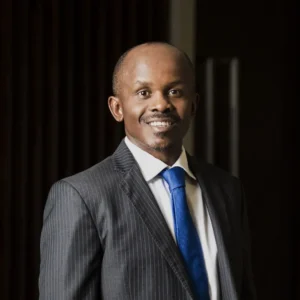
CEO & Co-Founder, Abojani Investment
Robert Ochieng is a visionary entrepreneur and the co-founder of Abojani Investment, a leading financial education platform in Kenya that has empowered over 20,000 Africans to embark on their investment journeys. As CEO, he has demonstrated an unwavering commitment to financial literacy, successfully demystifying money and investments and making them accessible and relevant to individuals from all walks of life.
Running Thriving Investment Communities
Robert’s influence extends well beyond Abojani Investment’s core offerings. He has actively fostered a sense of community by running investment forums and groups with a vast following of over 300,000 Africans. These communities provide a safe space for individuals to exchange ideas, share experiences, and support each other on their investment journeys.
Vision for the Future
As co-founder of Abojani Investment, Robert envisions a financially empowered Africa. He strives to expand the reach of his financial education initiatives, enabling millions more to gain the knowledge and confidence needed to achieve their financial goals. His vision is to create a society where every individual has the tools and understanding to build lasting wealth and prosperity.
Professional Background
Robert Ochieng is a highly accomplished CEO at the helm of Abojani Investment, an investment and advisory firm in Kenya. He is a seasoned professional with over 14 years of experience in IT, Finance, and leadership.
His career includes key roles at prominent institutions such as Equity Bank, Gulf African Bank, Guaranty Trust Bank (GTBank) and Airtel.
Robert’s expertise has also been sought after by the National Treasury for consultancy on planning and budgeting systems, showcasing his exceptional knowledge and skills in the field. Passionate about driving meaningful conversations and collaborations between academia, industry, and the public sector, Robert actively engages in research projects focusing on digital transformation within the financial services sector. With his visionary leadership and strategic insights, Robert Ochieng continues to make a significant impact in the business world.