
Leadership is often imagined as a destination, a title, a corner office that signals arrival. But in reality, leadership as we came to learn, feels more like being stretched into responsibility before you are fully convinced you are ready for it.
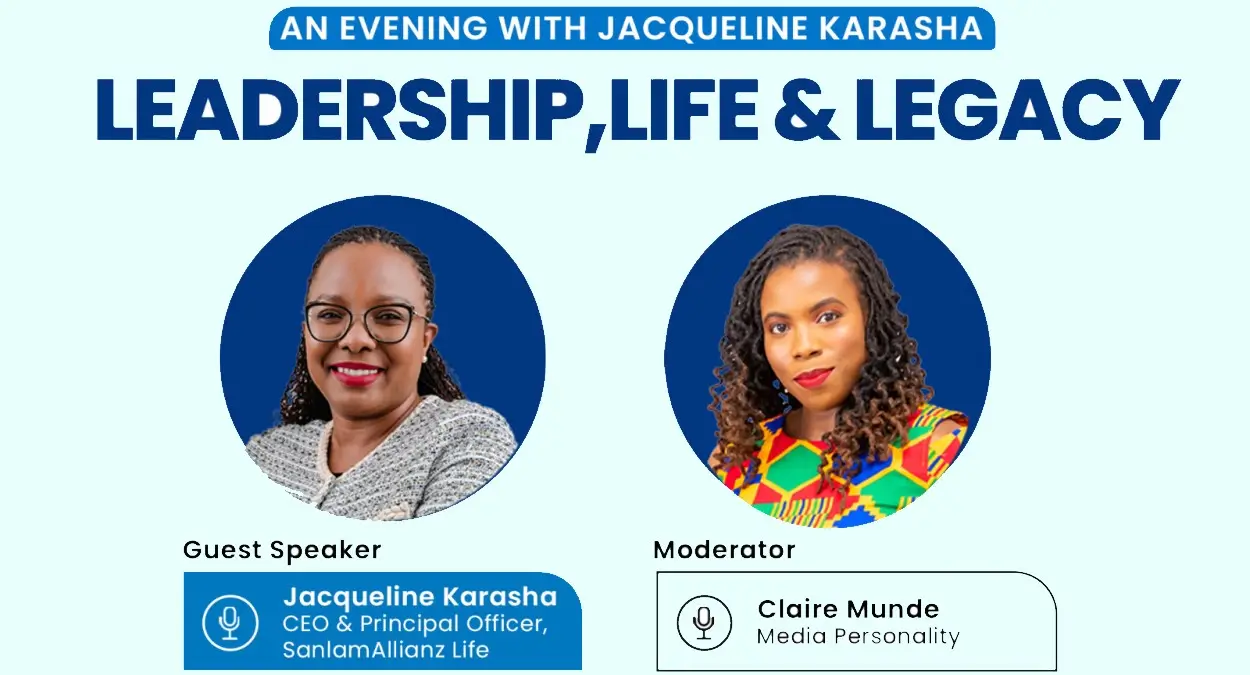
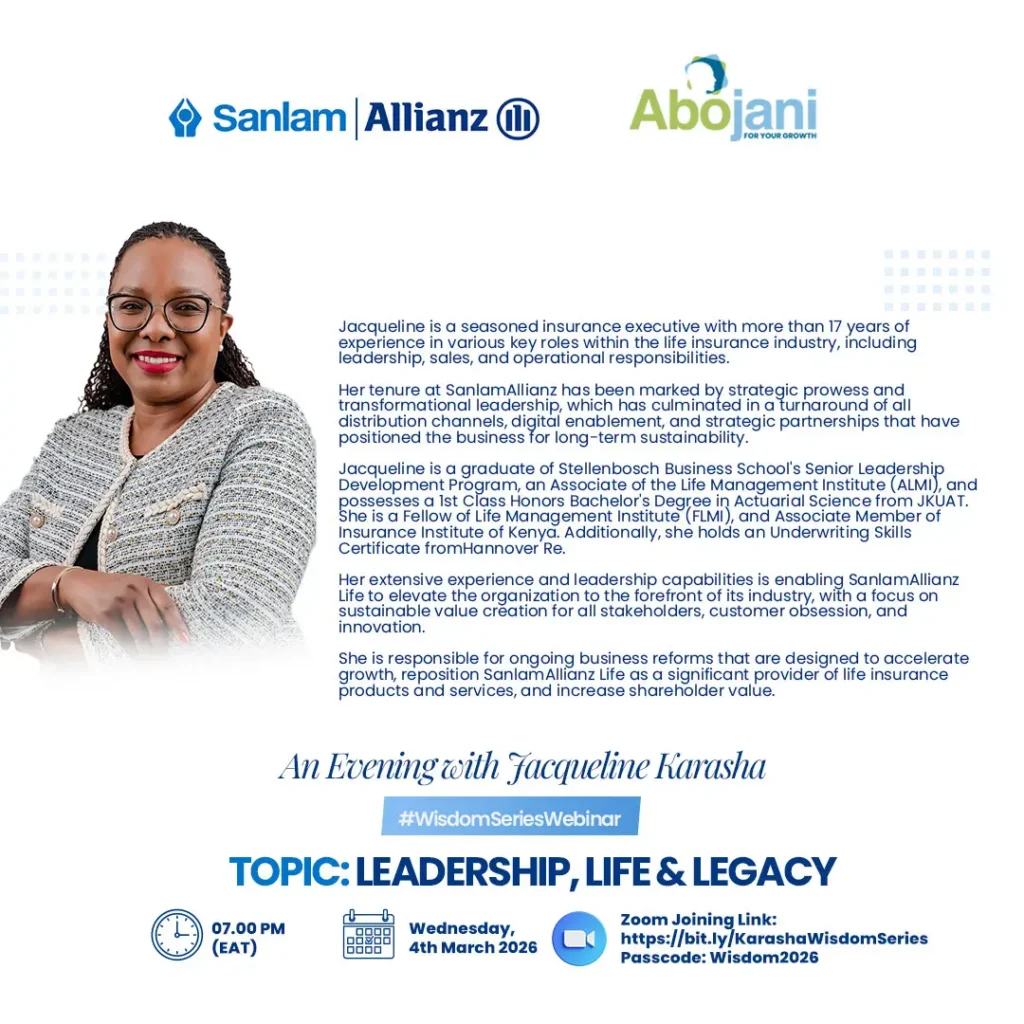
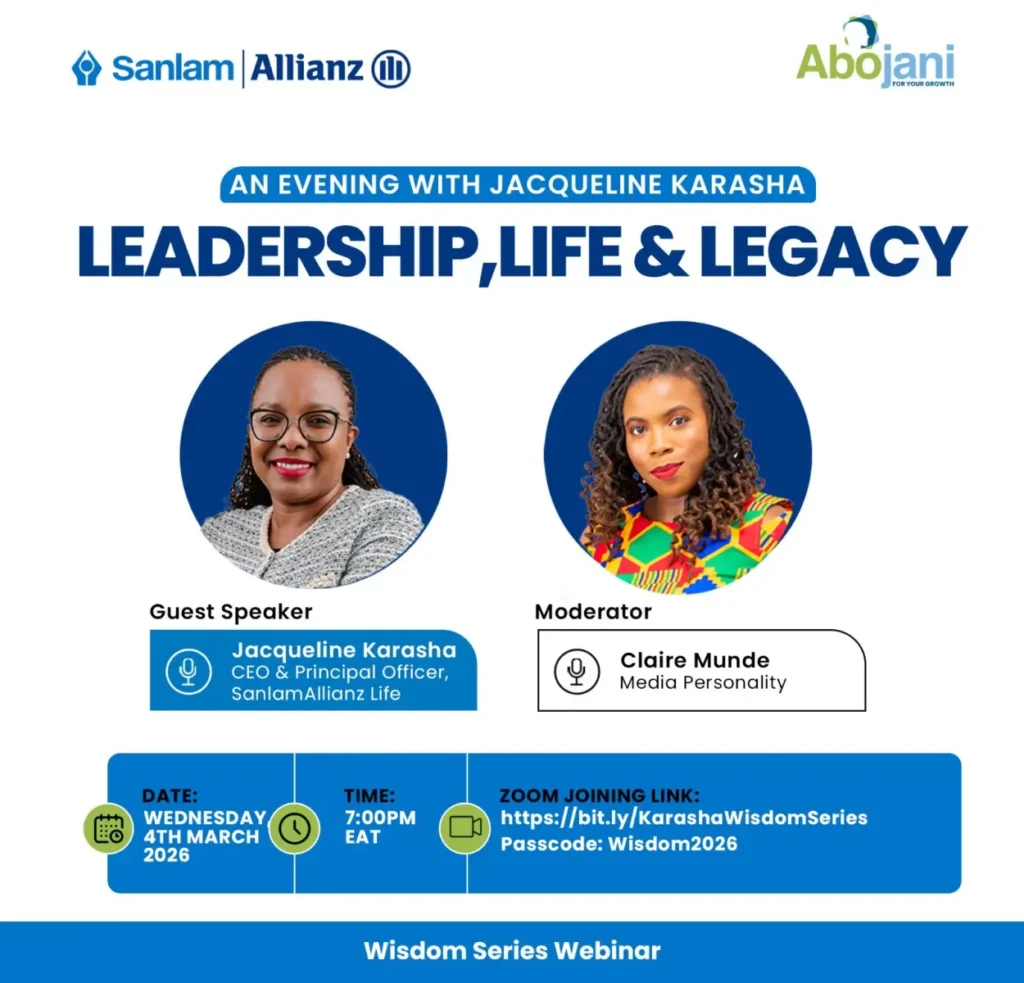
This was one of the themes that emerged during the recent #WisdomSeries webinar, “An Evening with Jacqueline Karasha: Leadership, Life and Legacy.” The conversation with Jacqueline Karasha, CEO and Principal Officer of SanlamAllianz Life Kenya, offered a thoughtful reflection on what leadership really demands from the people who carry it.
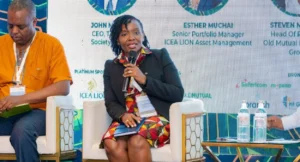
Her story begins with a familiar experience for many professionals: stepping into responsibility earlier than expected.
Karasha graduated at just 23 and within two years, she was already managing a team. It was a great opportunity, but also a test. She was now responsible for people who were older, more experienced, and in some cases far more seasoned in the working world.
In those early moments, confidence does not always come naturally.
There are rooms you walk into where you quietly wonder whether you truly belong. Karasha recalls feeling that tension clearly in her early leadership roles. Yet those same experiences forced her to grow into emotional maturity. Navigating leadership among colleagues with greater experience sharpened her emotional awareness and helped shape the leader she would eventually become.
Looking back, she credits part of that foundation to lessons learned long before her career began.

Through observing her father, she learned what integrity in leadership looked like in practice. That lesson stayed with her. Integrity, she believes, is not simply a virtue to speak about but a discipline to live by. Titles may change throughout a career, but reputation remains constant. In the end, a person’s name is often the most enduring currency they have.
As her career evolved, so did her understanding of leadership itself.
Many people imagine leadership decisions as clear choices between right and wrong. Yet the reality, especially at senior levels, is rarely that simple.
As she put it, “The higher you go, the less black and white your decisions become.” Every choice carries consequences that ripple across teams, customers, and institutions.
For Karasha, leadership is the constant awareness of those ripple effects.
Every decision, whether small or significant, has the potential to influence others. The responsibility of leadership therefore lies in ensuring those outcomes move the organization and its people in a constructive direction.
That reality also reshapes how leaders must engage with their teams.
Contrary to popular belief, effective leadership is not about having all the answers. Instead, it demands strong listening skills and emotional intelligence. Leaders must create environments where people feel comfortable contributing ideas and perspectives. Input and participation matters.
But leadership also requires decisiveness.
Listening widely does not remove the responsibility of making the final call. It simply ensures that the decision is made with a fuller understanding of the situation.
Preparation is another discipline Karasha places at the centre of leadership.
Even experienced professionals encounter moments of impostor syndrome. Doubt can creep in, especially when stepping into new roles or unfamiliar environments. But preparation remains the most reliable way to overcome it.
Knowing your subject matter, understanding the numbers behind decisions, and presenting yourself with clarity all reinforce confidence. She noted that she had seen capable professionals lose opportunities not because they lacked intelligence, but because they failed to prepare.
Preparation extends beyond knowledge. It also includes presence.
Showing up ready means being aware of how you carry yourself, how you communicate, and how you engage with others. Leadership often begins long before the meeting starts.
Karasha’s commitment to preparation is also reflected in her habit of reading widely. Books have played an important role in shaping how she thinks about leadership and decision making. Books like The CEO Next Door and Thinking, Fast and Slow helped sharpen her understanding of how leaders navigate complex environments.
From those insights she identifies several qualities that consistently appear in effective leaders: decisiveness, adaptability, reliability, and impact.
Decisiveness allows leaders to move forward even when perfect information is unavailable. Adaptability ensures they remain effective when circumstances shift. Reliability builds trust with teams who depend on their leaders to follow through. And impact keeps the focus on long-term outcomes rather than short-term wins.
At the same time, leadership also brings personal pressure.
Karasha describes herself as an overachiever, someone naturally driven to perform at a high level. Yet that same drive can make failure particularly difficult to process. One of the personal lessons she has decided to work through recently is learning how to become comfortable with failure when it inevitably occurs.
Failure should not define a leader. Instead, it offers moments to pause, recalibrate, and grow.
Outside the workplace, one of her strongest grounding influences is her son. Thinking about the values she models for him keeps her perspective clear. Leadership, in that sense, extends far beyond the office. The way we work, the choices we make, and the way we treat others all become examples to those watching us closely.
Karasha also tied these ideas of responsibility and impact back to the work being done at SanlamAllianz Life. In her view, financial wellbeing is not only about building wealth but also about protecting it. Too often, individuals focus on growth while overlooking the risks that could undo years of financial progress.
Zoning in on her experience within the insurance industry, she noted how it shaped how she views risk and financial responsibility.
Society often operates with an unspoken optimism that ‘bad things’ will not happen to us personally. Yet working in insurance provides a different perspective. It reveals how frequently individuals and families face unexpected financial shocks.
Insurance, she explains, is essentially the business of promises.
That promise can be a difficult one to communicate. It requires people to confront possibilities they would rather not think about. But when the moment arrives and a policy fulfills its purpose, the impact becomes unmistakable. Financial protection eases burdens that would otherwise fall entirely on families.
Through solutions ranging from life cover and school endowment plans to property and domestic protection, critical illness cover, health solutions, and investment options such as money market funds, the goal is to help individuals build a combination of financial tools that support both stability and long-term growth.
For that reason, she describes insurance as one of the most people-centred industries in the financial sector.
Ultimately, when Karasha reflects on leadership, the conversation returns to legacy.
Titles may change and careers evolve. But the true measure of leadership lies in the people who grow because of your influence.
She often tells colleagues and mentees that her goal: “I want to be the least of you.” In other words, she hopes the people she mentors will go on to surpass her achievements. That perspective requires humility but also a commitment to creating opportunities for others.
Across many sectors, she believes there are talented young professionals with the capacity to achieve remarkable things. What they often lack is access. Leaders who recognize that gap have an opportunity to bridge it.
In the end, leadership is not defined by hierarchy or authority. It is defined by how people leave the environments they lead.
Whether guiding a family, a team, or a large organization, the question remains the same: do people leave that experience stronger, more confident, and more capable than before?
If the answer is yes, then leadership has served its purpose.
And that may be the most meaningful legacy any leader can hope to leave.
If you missed the session, catch the webinar here:
Passcode: Wisdom@26