


Investing is often presented as a technical discipline, one defined by charts, earnings reports, and market trends. For many, it appears to be a space reserved for those who can interpret financial data with precision and speed. Yet, beneath the surface of numbers lies a more powerful force that ultimately determines success or failure: human behaviour.
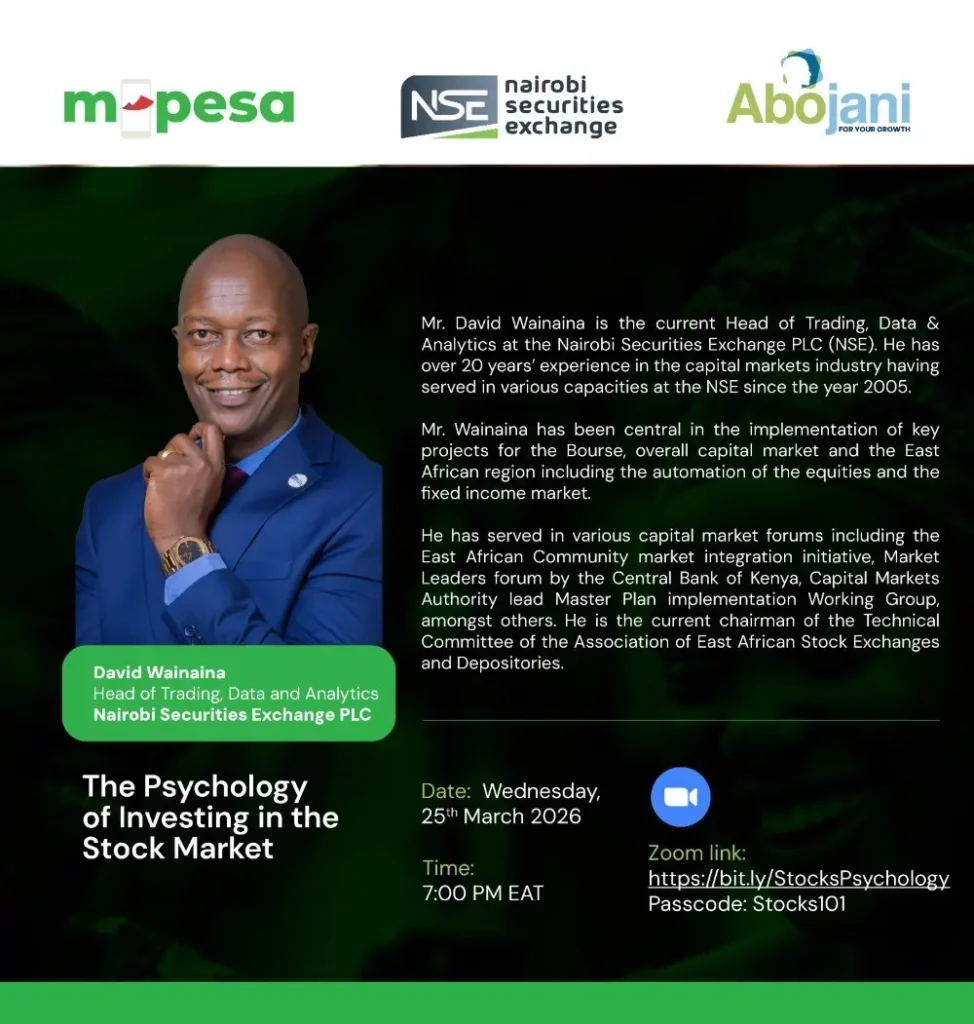
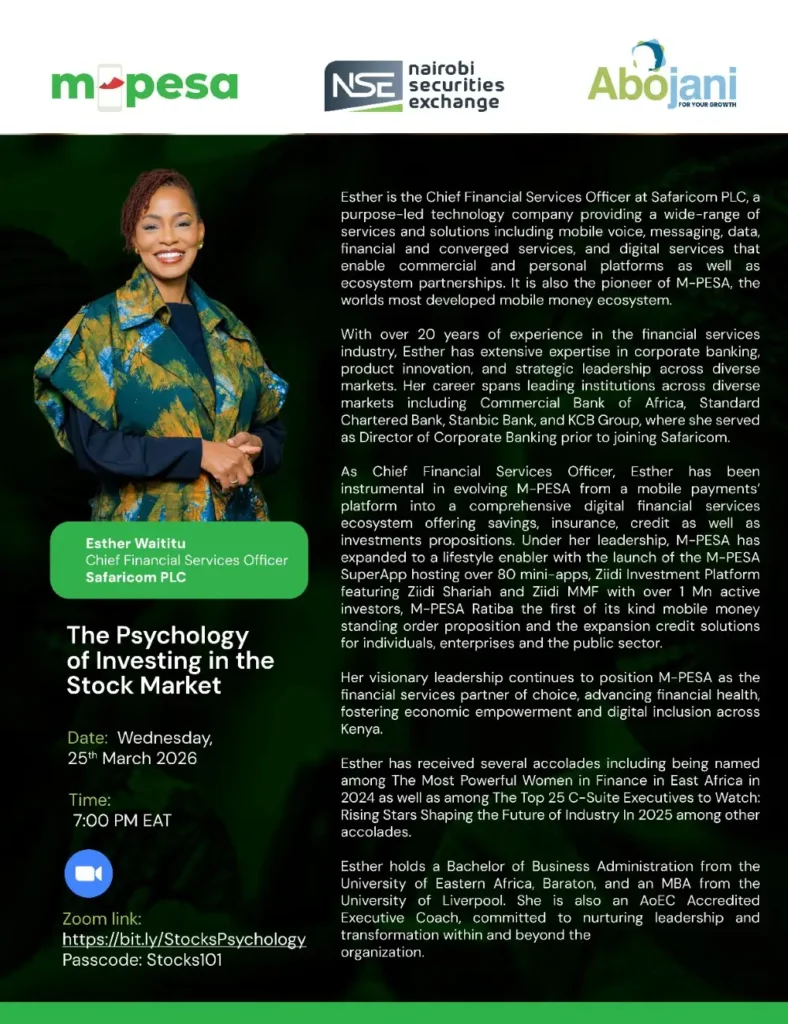
At our most recent Abojani webinar, held in partnership with M-Pesa and the Nairobi Securities Exchange PLC, we explored this idea in depth. Bringing together the voices of Esther Waititu (Chief Financial Services Officer, Safaricom PLC), David Wainaina (Head of Trading, NSE), and Robert Ochieng (CEO, Abojani Investment), the discussion shifted attention away from purely analytical skills and toward the psychology that underpins every investment decision.
Also read: How the Stock Market Works in Kenya: The Infrastructure Behind Your Investments
What emerged was a clear message: investing is less about knowing everything and more about managing yourself.
One of the earliest behavioural barriers is the belief that investing requires significant capital. In reality, the opposite may be more effective. Beginning with small amounts allows individuals to learn without exposing themselves to overwhelming risk. It creates room for experimentation, observation, and gradual understanding.
This approach does more than protect capital. It builds confidence. When investors start small, they give themselves the opportunity to make mistakes, understand market movements, and develop a sense of personal rhythm. For instance, platforms like Zidii Trader are helping lower barriers to entry, allowing investors to start with very small amounts. Over time, this steady exposure becomes more valuable than any single large investment. The process of learning becomes embedded, and confidence grows from experience rather than speculation.
However, even with a strong start, many investors encounter one of the most challenging aspects of the market: volatility. Prices do not move in a straight line. They rise, fall, and sometimes remain stagnant for extended periods. While this is widely known in theory, it often feels very different in practice. A decline in value can trigger fear, leading to reactive decisions that undermine long-term goals.
The ability to remain steady during periods of decline is not a technical skill, it is a psychological one. Investors who succeed over time tend to understand that market movements are normal and, in many cases, temporary. They resist the urge to act impulsively, instead grounding their decisions in information and perspective. This does not mean ignoring risks, but rather responding to them with intention instead of emotion.
Closely tied to this is the importance of having a clear plan. Without one, investors are easily influenced by external noise. Social media, peer conversations, and trending topics can create a sense of urgency that leads to unstructured decision-making. In such an environment, it becomes difficult to distinguish between informed action and reactive behaviour.
A well-defined plan acts as an anchor. It clarifies why an investment is being made, what the expected timeline is, and what outcomes are being pursued. More importantly, it provides a reference point during moments of uncertainty. When markets fluctuate or new information emerges, investors with a plan are better equipped to evaluate whether a change in strategy is necessary or whether patience is the more appropriate response.
However, access to tools and platforms has introduced a new behavioural challenge. The easier it becomes to act, the less time investors spend thinking. The barrier to entry has been lowered, but so too has the friction that once encouraged reflection.
This creates a subtle but significant risk. The ability to execute transactions quickly can give the illusion of control, while in reality, it may lead to fragmented and inconsistent decisions. Investors may find themselves engaging frequently with the market without a clear sense of direction. Over time, this behaviour can erode both confidence and capital.
To counter this, there must be a deliberate effort to pause and reflect. Reviewing past decisions, assessing performance, and questioning underlying assumptions are all essential practices. Investing should not become a series of disconnected actions, but rather a continuous process of learning and refinement.
Consistency, more than intensity, is what ultimately drives results.
Wealth is the result of repeated, disciplined actions over time. This principle is simple in concept but difficult in execution. It requires commitment, patience, and a willingness to prioritise long-term progress over short-term excitement.
Digital tools like Ziidi Trader can support this process by enabling automation and reducing the reliance on willpower. When investing becomes a routine rather than a choice that must be made repeatedly, it is easier to maintain discipline. Over time, these small, consistent contributions accumulate, creating a foundation for sustainable growth.
The sources of information that guide investment decisions must also be approached with caution. In an age where content is abundant and easily accessible, not all information carries equal value. Unverified tips, viral trends, and anecdotal success stories can create misleading narratives that distort perception.
Just as individuals are cautious about what they consume physically, there should be similar care in evaluating financial advice. Credible sources, verified data, and a clear understanding of fundamentals should form the basis of decision-making. Acting on unreliable information not only increases risk but also reinforces reactive behaviour.
Another critical aspect of investing psychology is understanding personal risk tolerance. This is often discussed in theoretical terms, but its true meaning becomes apparent during moments of loss. How an individual reacts when the value of their investment declines reveals far more than any questionnaire or assumption.
Risk tolerance is deeply personal. It is influenced by financial circumstances, emotional disposition, and individual experiences. Recognising this allows investors to make choices that align with their capacity to remain steady under pressure. Starting with smaller investments and gradually increasing exposure can help individuals better understand their own limits and build resilience over time.
Interestingly, the very moments that test investors the most can also present opportunities. Market downturns, while uncomfortable, often create conditions where quality assets become available at lower prices.
This requires both foresight and discipline. Setting aside funds specifically for such opportunities ensures that investors are not forced to react out of necessity. Instead, they can approach market dips with a sense of readiness, viewing them as part of a broader strategy rather than isolated events.
Ultimately, the most consistent theme across this discussion was the importance of a long-term perspective. Investing is not a race to achieve quick gains, but a process that unfolds over time. Short-term fluctuations, while often intense, become less significant when viewed within a broader context.
Staying invested, continuing to learn, and tracking progress are all part of this journey. Small milestones play a crucial role in maintaining motivation and reinforcing positive behaviour. They serve as reminders that progress is being made, even when results are not immediately visible.
In the end, the psychology of investing is about balance. It is about combining knowledge with discipline, access with understanding, and action with reflection. The tools available to investors today have made participation easier than ever, but they have also placed greater responsibility on individuals to manage themselves effectively.
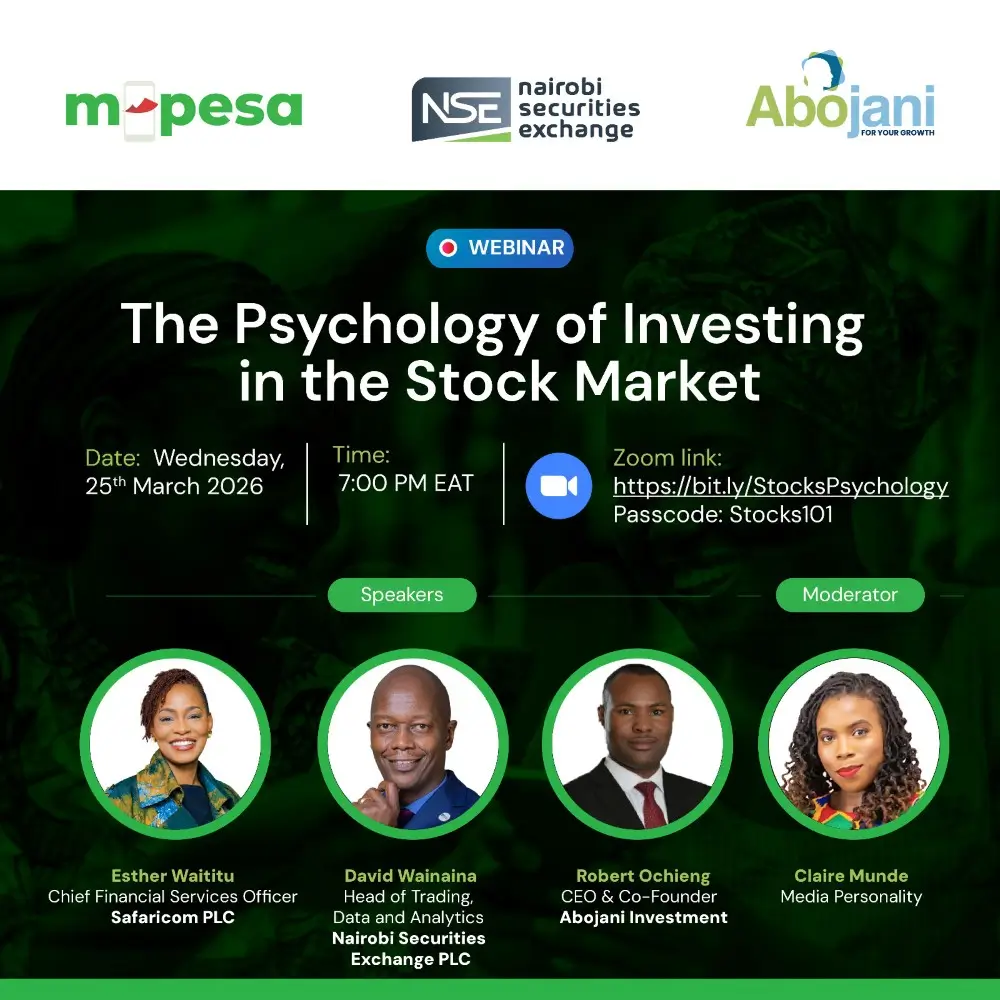
If you missed this session, catch it here:
Passcode: Stocks@101
#Why Behaviour, Not Just Numbers, Shapes Outcomes

CEO & Co-Founder, Abojani Investment
Robert Ochieng is a visionary entrepreneur and the co-founder of Abojani Investment, a leading financial education platform in Kenya that has empowered over 20,000 Africans to embark on their investment journeys. As CEO, he has demonstrated an unwavering commitment to financial literacy, successfully demystifying money and investments and making them accessible and relevant to individuals from all walks of life.
Running Thriving Investment Communities
Robert’s influence extends well beyond Abojani Investment’s core offerings. He has actively fostered a sense of community by running investment forums and groups with a vast following of over 300,000 Africans. These communities provide a safe space for individuals to exchange ideas, share experiences, and support each other on their investment journeys.
Vision for the Future
As co-founder of Abojani Investment, Robert envisions a financially empowered Africa. He strives to expand the reach of his financial education initiatives, enabling millions more to gain the knowledge and confidence needed to achieve their financial goals. His vision is to create a society where every individual has the tools and understanding to build lasting wealth and prosperity.
Professional Background
Robert Ochieng is a highly accomplished CEO at the helm of Abojani Investment, an investment and advisory firm in Kenya. He is a seasoned professional with over 14 years of experience in IT, Finance, and leadership.
His career includes key roles at prominent institutions such as Equity Bank, Gulf African Bank, Guaranty Trust Bank (GTBank) and Airtel.
Robert’s expertise has also been sought after by the National Treasury for consultancy on planning and budgeting systems, showcasing his exceptional knowledge and skills in the field. Passionate about driving meaningful conversations and collaborations between academia, industry, and the public sector, Robert actively engages in research projects focusing on digital transformation within the financial services sector. With his visionary leadership and strategic insights, Robert Ochieng continues to make a significant impact in the business world.