
Picture two people who both put KShs. 100,000 into buying public companies on the Nairobi Securities Exchange (NSE) on the same morning.
A year later, one has barely looked at their account, probably collected one or two dividend payments, and is quietly up. The other has made weekly trades, stared at price charts during work meetings, paid a small fortune in commissions, and is somehow down, despite “being right” about the market often. Same market, same starting capital, wildly different outcomes. The difference was never the money. It was the approach.
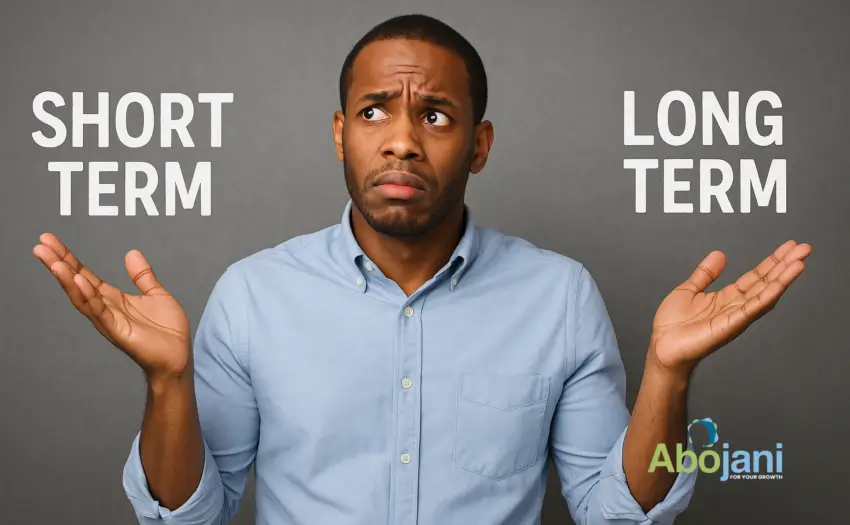
There are two main ways people participate in the stock market as investors or as traders. The difference isn’t just about how long you hold a share; it runs deeper, into your mindset, your goals, your risk appetite, and how you spend your time.Yet most people never consciously choose.
People drift into one or the other by accident, copy what a friend or a “influencer” has sworn by and then wonder why the results don’t match the hype sold.
In Kenya, most people who own shares are somewhere in the middle. Maybe you bought Safaricom during the 2008 IPO and never sold. Maybe you also keep one eye on market chatter, hoping to catch the next stock that will “pop.” So, which one are you? And more importantly, which one should you be?
Long-Term Investing on the Nairobi Securities Exchange (NSE): Building Wealth Through Shares
This is an investor who is in it for the long haul. They buy shares in companies they genuinely believe in. It could be because of the brand, the business model, the quality of management, or the long-term outlook. They buy and then, and they hold. Their goal is to build wealth slowly, steadily, and with discipline, the same way you’d grow a tree rather than harvest a weed.
A long-term investor will hold on through market dips. They reinvest their dividends and don’t panic-sell when prices fall. They also don’t chase the hype when a stock is trending. (This is becoming a thing as social media influencers turn everything into a meme.) Over time, they benefit from two powerful engines working together, i.e. capital appreciation (the share price rising as the company grows) and compounding (the reinvested dividends earning returns of their own).
On the NSE, an investor is the person who bought, say, Equity or KCB years ago, kept reinvesting the dividends, and barely noticed the noise in between.
Join our 6th Annual Abojani Economic Empowerment Conference 2025
This is the camp most ordinary Kenyans belong in, whether they realise it or not. If you have a job, a business, a family, and twenty-four hours in your day like the finfluencers love to remind us, you simply do not have the time (or the temperament) to watch screens all day. And that is perfectly fine. Some of the wealthiest investors in the world made their fortunes doing remarkably little, very patiently.
| Pros of Investing: | Cons of Investing: |
| Less time-intensive, ideal if you have a day job or business. | Patience: gains take years, not weeks, to materialize. |
| Lower transaction costs and taxes | Discipline to hold through scary market dips without panic-selling |
| Takes advantage of compounding | Tolerance for slow, unglamorous progress in the early years |
| Peace of mind over the long term; Your money works while you sleep. | Vulnerability to long-term risks like poor governance or regulation |
The Short-Term Trader
A trader is a short-term participant. The goal is to profit from price movements by buying when a stock dips and selling when it rises repeatedly. The focus is not really on the business behind the share; it is on the price action of the share itself. A trader can make money on a company they wouldn’t want to own for ten minutes, as long as the price moves the right way.
Traders lean on technical analysis (reading charts and patterns), news cycles, momentum, and sometimes plain instinct. The discipline comes in several flavours. We have day traders open and close positions within a single day; swing traders who ride moves over days or weeks; and scalpers, who chase tiny profits many times a day. Each has its own rhythm, its own tools, and its own stress levels.
Trading can absolutely be profitable, but here is the part that the hype never mentions, and where honesty matters more than adrenaline rushes.
| Pros of Trading: | Cons of Trading: |
| Potential for quick profits | Riskier; high chance of losses |
| Flexible; can trade as opportunities arise | Requires time, tools, and fast decision-making |
| Can take advantage of market volatility | Can lead to emotional decisions and burnout |
| Frequent trading can erode returns through fees and taxes |
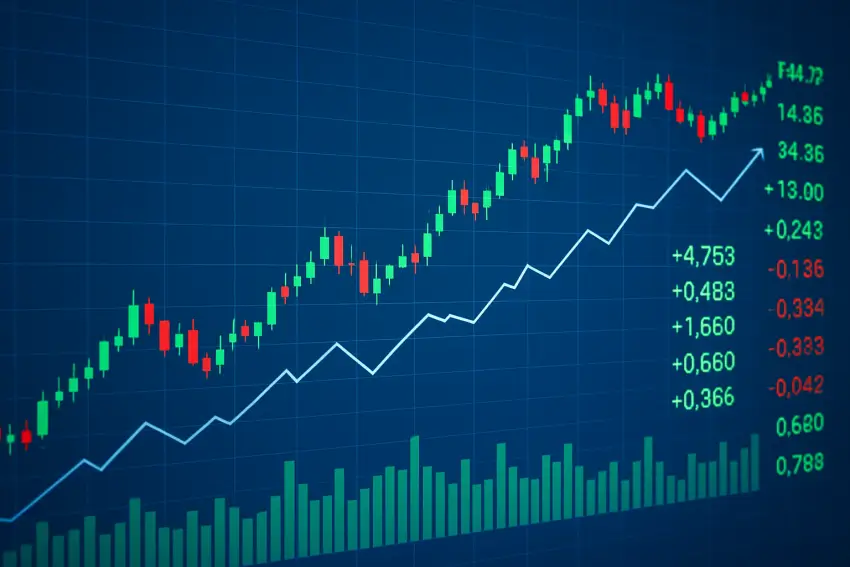
The Uncomfortable Truth About Trading
If trading sounds thrilling, it is. But thrilling and profitable are not the same thing, and the data here is sobering. Across multiple studies and markets, roughly 70% to 80% of active retail day traders lose money.
One landmark study that tracked over 360,000 traders for fourteen years found that only about 1% were able to consistently beat a simple market average. Put differently, the overwhelming majority of people who try to beat the market by trading would have done better simply by buying and holding good companies.
Why is this the case? The issue is rarely intelligence but psychology and cost. Researchers have found that the investors who trade the most tend to earn the lowest returns, because every trade carries a fee and a tax, and then human emotion sabotages the rest.
There is even a well-documented behavioural spiral that plays out again and again. It shows that a few early wins breed overconfidence, overconfidence breeds bigger and riskier bets, and one catastrophic loss wipes out months of gains. The market is, among other things, a very expensive machine for transferring money from the impatient to the patient. I am paraphrasing Warren Buffett to drive my point home.
None of this is to say that trading is impossible or wrong. It just means trading is a demanding profession, not a side hustle or a shortcut, and it should be treated as one. The people who succeed are rarely the loudest in the WhatsApp group; they are the most disciplined, the best at managing risk, and the most honest about their losses.
The Costs That Quietly Decide the Winner
Here is something both camps must understand, because it is where many Kenyan participants lose money without realising it. Every time you trade on the NSE, costs apply. Brokerage commissions and associated levies typically come to around 2% of per transaction charged when you buy and again when you sell. For a long-term investor making a handful of moves a year, that barely registers. For a trader making dozens of moves, it is a strong headwind blowing against every single position.
The investor who holds quietly defers and minimizes these frictions; the trader pays the fees over and over. This is a large part of why patient investing so often beats active trading after costs not because traders are wrong about the market, but because they must be right often enough to overcome the constant drag of fees.
There are also practical realities worth knowing before you start: you trade through a CMA licensed stockbroker, your shares sit in a CDS account (which you can now open and fund via M-Pesa, through Ziidi Trader), the minimum order is now just one share, and NSE prices can move at most 10% up or down in a single day. These guardrails shape what is realistically possible, especially for would-be day traders dreaming of dramatic overnight swings.
So, are you a trader or investor?
There is no wrong answer here only a wrong fit. What matters is clarity about who you are and the intention behind what you do with your money.
Let your honest answers to the questions below guide you:
Lean towards investing if you want to build long-term wealth, you don’t want to spend your days watching stock prices, you value peace of mind, and you’re happy to let time and compounding do the heavy lifting. For the vast majority of Kenyans (busy people with jobs, businesses, families and other obligations and interests to attend to) this is the sensible default. And it is how real, lasting wealth is actually built.
Consider trading if you genuinely enjoy reading markets, you have a high tolerance for risk and the very real possibility of loss, and you can commit serious time, discipline, and emotional control. Treat it as a skill to be learned properly and a profession to be respected not gambling, and certainly not a get-rich-quick scheme. Also, never trade money you cannot afford to lose.
You can also do both, and many sensible people do. A common, powerful approach is the core-and-satellite model. You keep a large “core” portfolio of long-term holdings that you rarely sell. These are your blue chips, your dividend payers, your steady compounders, and a smaller “satellite” portfolio that you trade more actively with money you can afford to risk. This way, you get the wealth building engine of investing, while scratching the itch to be active without betting your future on it.
The Bottom Line
The most important thing is to understand what you’re doing and why. Don’t trade just because someone you follow online said a stock will “pop.” And don’t buy and hold a poor company just because someone told you to “be patient.” Patience in a sinking ship is not a virtue; it is just a slower way to lose.
The stock market is a tool. One of the greatest wealth-creation tools ever built. Whether you use it like a patient farmer or a skilled trader, what determines your success is not the label you wear but the knowledge, discipline, and intention you bring.
Choose your approach deliberately, learn it properly, and let your own financial goals (not the noise) lead the way.
#Investor #Trader #Shares #Stocks
Ready to move from guessing to investing with confidence?
→ Reserve your seat at the Abojani Masterclass
Knowing whether you’re a trader or an investor is just the start. The next step is learning how to actually do it well; how the NSE works, how to value companies, how to manage risk, and how to build wealth that lasts. Join thousands of Africans who’ve transformed their financial future with practical, locally relevant training.

CEO & Co-Founder, Abojani Investment
Robert Ochieng is a visionary entrepreneur and the co-founder of Abojani Investment, a leading financial education platform in Kenya that has empowered over 20,000 Africans to embark on their investment journeys. As CEO, he has demonstrated an unwavering commitment to financial literacy, successfully demystifying money and investments and making them accessible and relevant to individuals from all walks of life.
Running Thriving Investment Communities
Robert’s influence extends well beyond Abojani Investment’s core offerings. He has actively fostered a sense of community by running investment forums and groups with a vast following of over 300,000 Africans. These communities provide a safe space for individuals to exchange ideas, share experiences, and support each other on their investment journeys.
Vision for the Future
As co-founder of Abojani Investment, Robert envisions a financially empowered Africa. He strives to expand the reach of his financial education initiatives, enabling millions more to gain the knowledge and confidence needed to achieve their financial goals. His vision is to create a society where every individual has the tools and understanding to build lasting wealth and prosperity.
Professional Background
Robert Ochieng is a highly accomplished CEO at the helm of Abojani Investment, an investment and advisory firm in Kenya. He is a seasoned professional with over 14 years of experience in IT, Finance, and leadership.
His career includes key roles at prominent institutions such as Equity Bank, Gulf African Bank, Guaranty Trust Bank (GTBank) and Airtel.
Robert’s expertise has also been sought after by the National Treasury for consultancy on planning and budgeting systems, showcasing his exceptional knowledge and skills in the field. Passionate about driving meaningful conversations and collaborations between academia, industry, and the public sector, Robert actively engages in research projects focusing on digital transformation within the financial services sector. With his visionary leadership and strategic insights, Robert Ochieng continues to make a significant impact in the business world.