
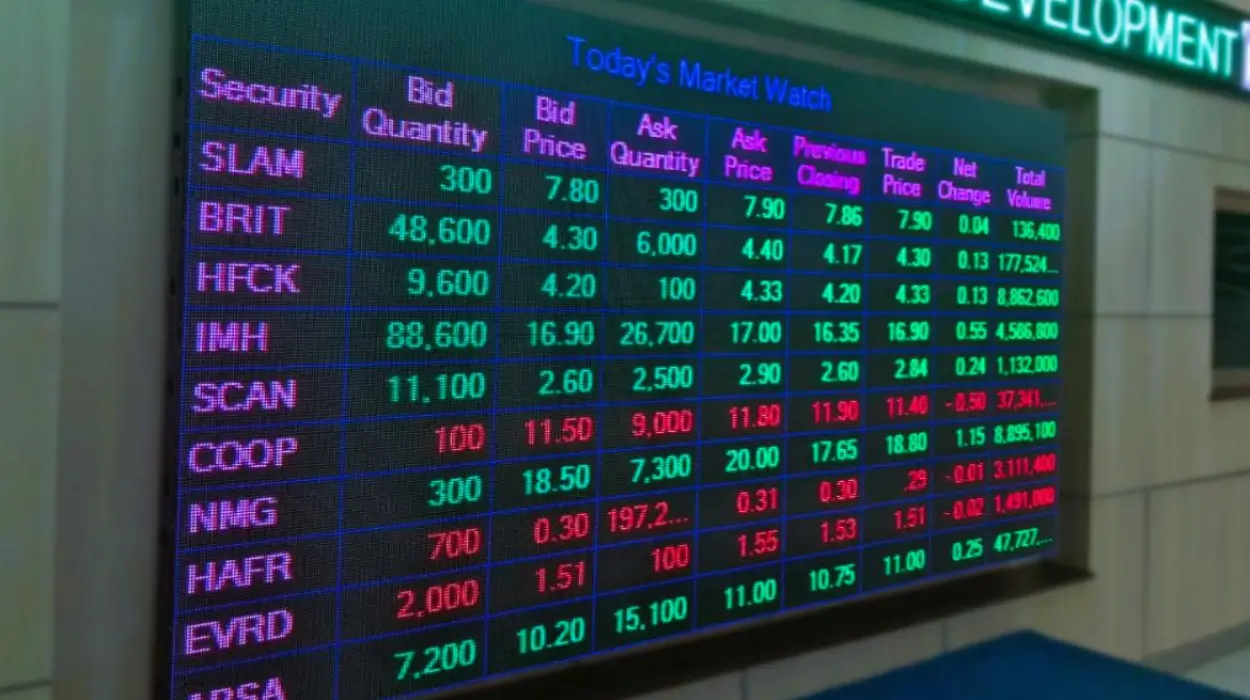
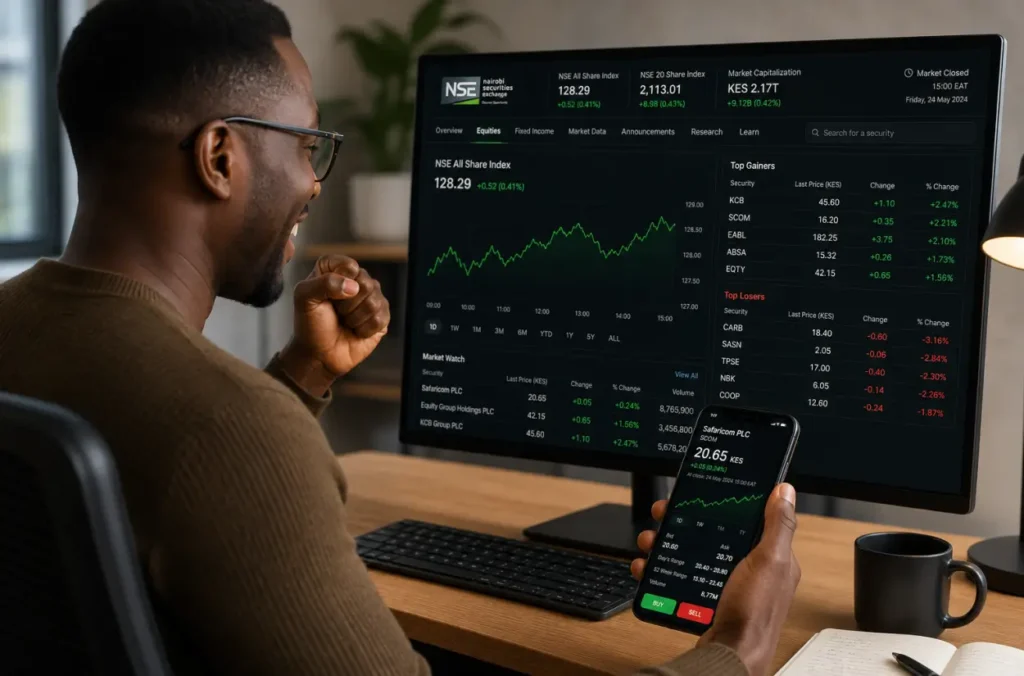
Understanding how the stock market works in Kenya often begins and ends, for most people, with a broker app.
You decide to get into stock investing, so you open an account, deposit money, and buy shares. Sometimes you receive a dividend every few months and maybe even decide to sell some of your shares at a profit. The process appears remarkably simple.
Yet behind that simplicity lies an entire ecosystem of institutions, regulations, technology, and professionals working together to make investing possible.
From Paper Certificates to Electronic Ownership
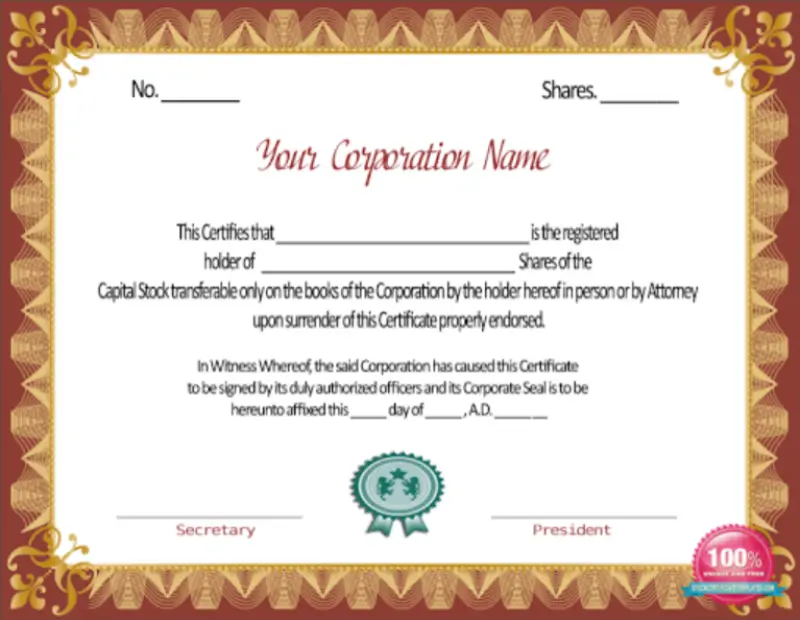
There was a time when investors held paper certificates as proof of ownership. These documents were stored in safes, envelopes, or filing cabinets, and every transaction required manual updates and verification. The system worked, but it was slow, fragile, and heavily dependent on paperwork moving correctly from one party to another.
Over time, the market participants and regulators learned difficult lessons. Investors experienced delayed settlements, lost certificates, and brokerage failures exposed weaknesses in the system. The Kenyan capital market that exists today is a response to those experiences.
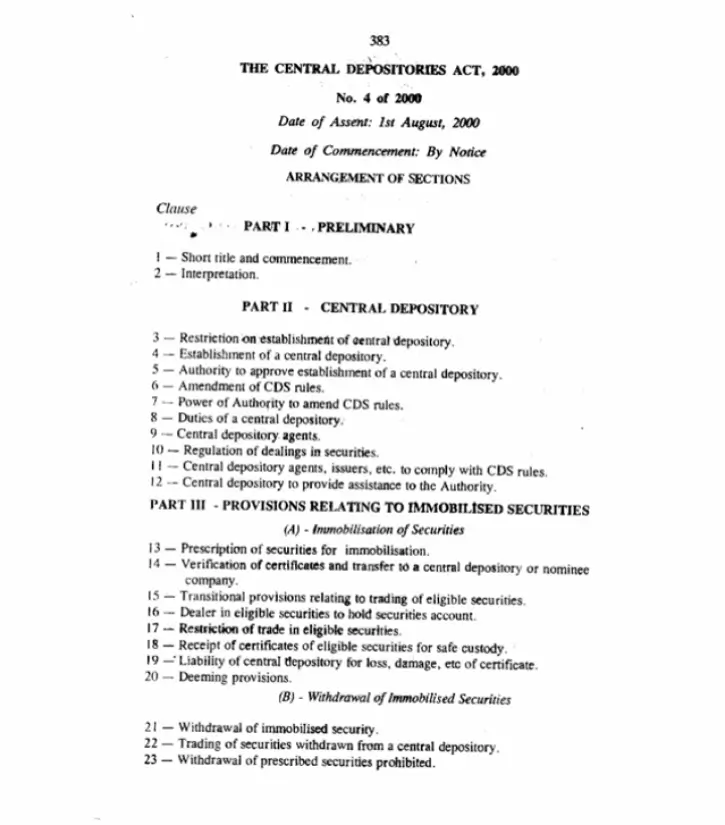
These weak points led to the immobilisation process, which began when the Central Depository and Settlement Corporation (CDSC) commenced operations on 10 November 2004. This fundamentally changed the workings of the market.
Immobilisation meant that investing in shares would be recorded electronically; meaning existing physical certificates were submitted back to stockbrokers and registrars and effectively “locked away” and updated into digital CDS accounts. Dematerialisation, the next phase, removed paper certificates as evidence of ownership entirely all equities listed on the NSE was completed on 1 November 2013, followed by corporate bonds in October 2014, marking the end of paper certificates in the Kenyan capital markets.
From Your Pocket to Ownership: How the System Works
As a first-time investor, questions and fears often arise.
What happens if my broker closes? Who can know that I own shares? Who pays dividends? Who makes sure everyone follows the rules? If something goes wrong, who do I speak to?
The answers lie in understanding the infrastructure that sits behind every investment transaction.
Imagine you have decided to buy shares in a listed company.
Stockbrokers and Investment Banks: Your Gateway to the Market
The first institution you encounter is usually a stockbroker or investment bank.
A stockbroker is your gateway to the market. They open your account, guide you through the investment process, receive your instructions, and place your buy and sell orders into the market. They are essentially your representatives within the securities market because individual investors cannot directly connect to the trading systems of the exchange.
However, brokers do not own the marketplace, and they do not become the owners of your shares. Their role is to facilitate transactions between investors and the market.
The Nairobi Securities Exchange (NSE): Kenya’s Marketplace for Securities
What is this “marketplace”? Enter the Nairobi Securities Exchange (NSE).
Think of the NSE not as the stock market itself, but more as the marketplace where securities are traded. In the same way that a supermarket provides the space where buyers and sellers interact, the NSE provides the infrastructure that allows investors to buy and sell shares, bonds, and other securities in a fair, orderly, and transparent manner.
Founded in 1954, the NSE is the principal securities exchange in Kenya and one of the oldest in Africa. The exchange performs several functions simultaneously. It:
- Provides the technology that allows trading to happen in real time
- Establishes listing requirements that companies must satisfy before they can offer their securities to the public
- Sets and enforces trading rules designed to maintain orderly markets
- Disseminates information such as prices, volumes, and market announcements so that all investors have access to relevant information at the same time
The existence of the exchange serves a broader economic purpose as well.
Without an organised exchange, investors would struggle to find buyers and sellers for their securities. Companies would have fewer opportunities to raise long-term capital. Price discovery would be inefficient, and trust in the market would diminish significantly.
The exchange creates a structured environment where capital can move efficiently from savers and investors to businesses and governments that need funding.
The Central Depository and Settlement Corporation (CDSC): Where Your Shares Live
Once your trade is executed on the NSE, another institution takes over.
The Central Depository and Settlement Corporation (CDSC) is responsible for recording and maintaining ownership of securities in electronic form. As stated before, investors used to have physical share certificates that could be lost, damaged, forged, or stolen. Transactions were slow and record-keeping was cumbersome.
The CDSC modernised this process by creating a central electronic system that records ownership and facilitates settlement.
Think of the CDSC as the official digital register of ownership.
When you purchase shares, the transaction eventually results in those securities being credited to your CDS account. When you sell, the securities are debited from your account. The system ensures that ownership records are updated accurately and efficiently.
What Happens If Your Stockbroker Collapses?
If you find yourself asking, “What happens if my broker collapses?”, your CDS account is the answer.
Because your shares are held in your CDS account, your ownership of those shares remains intact. The broker may have facilitated the transaction, but your securities are recorded within the central depository system rather than sitting inside the broker’s own accounts.
The market infrastructure has been intentionally designed this way because separating ownership records from brokerage operations reduces risk and enhances investor protection.
Share Registrars: The Keepers of Shareholder Records
Another important participant in the ecosystem is the share registrar.
Every listed company appoints a registrar to maintain its shareholder records. Registrars process corporate actions such as dividend payments, bonus issues, rights issues, shareholder communications, and changes to investor information.
Suppose a company declares a dividend, and you do not receive it. Your first instinct may be to call your broker. In many cases, however, the registrar is the appropriate point of contact because they are responsible for maintaining the shareholder register and administering the dividend payment process.
Registrars may not receive much public attention, but they play a critical role in ensuring that shareholders can exercise their rights and receive their entitlements.
The Capital Markets Authority (CMA): The Regulator
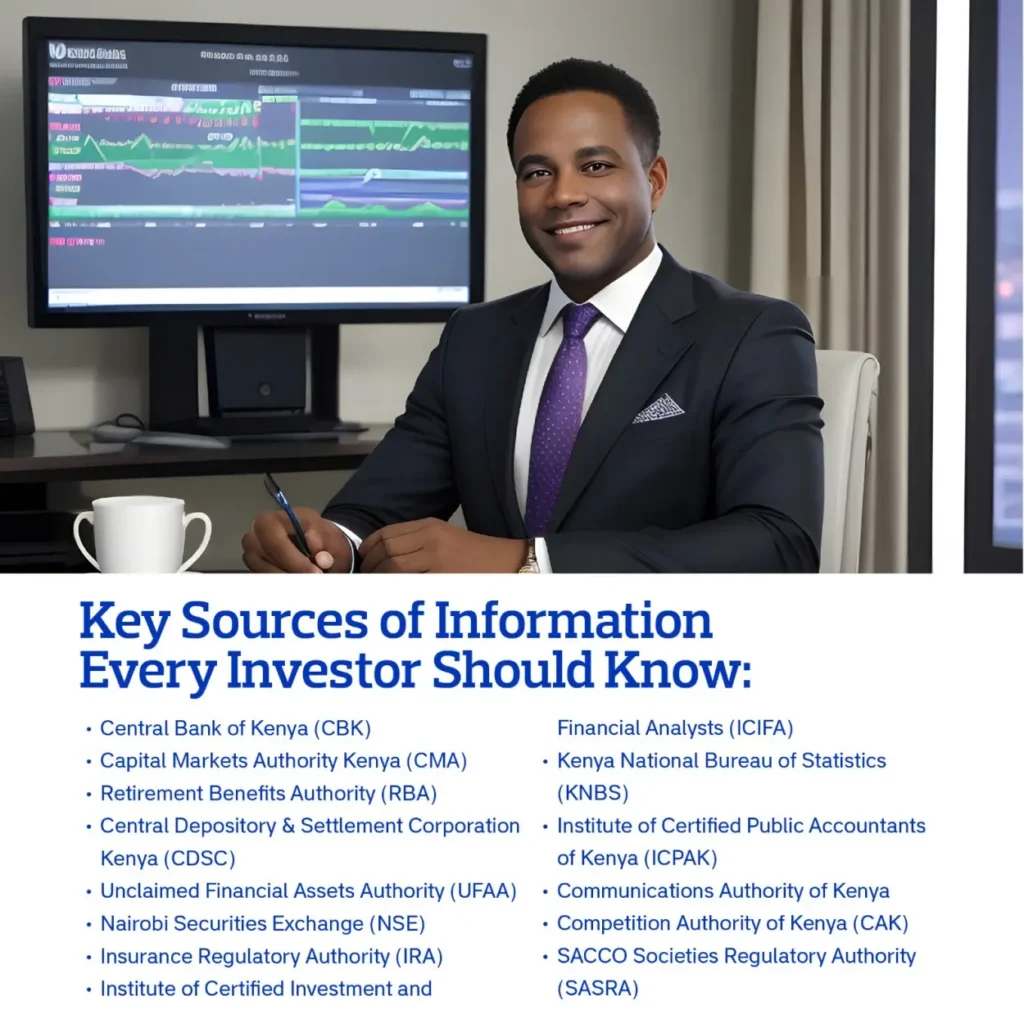
Overseeing all these participants is the Capital Markets Authority (CMA).
The CMA is the regulator of Kenya’s capital markets. Established under the Capital Markets Act (Cap. 485A) in December 1989 and inaugurated in March 1990, its responsibilities extend far beyond licensing institutions.
The Authority develops regulations, supervises market participants, monitors compliance, investigates misconduct, promotes market development, and advances investor education initiatives. It establishes the standards that brokers, investment banks, fund managers, custodians, and other intermediaries must satisfy before they are allowed to operate.
The regulator also serves an important confidence-building function.
Capital markets cannot function effectively without trust. Investors need confidence that there are rules governing market conduct, that market participants are subject to oversight, and that there are mechanisms for addressing complaints and misconduct.
The Investor Compensation Fund Explained
Beyond regulation and supervision, the CMA also anchors the investor protection framework in the market. This includes the Investor Compensation Fund (ICF), which exists as a last line of protection for investors in cases where a licensed market intermediary, such as a broker or investment bank, is unable to meet its obligations due to insolvency or proven failure in handling client assets properly.
In simpler terms, if an investor suffers a loss that is not recoverable through normal processes such as transfer of accounts or recovery of assets, the compensation framework may step in under strict conditions.
How the Pieces Fit Together
When viewed together, these institutions represent an interconnected system that ensures you, as the investor, are well protected.
- The broker connects investors to the market.
- The NSE provides the marketplace where securities are traded.
- The CDSC records and settles ownership electronically.
- Registrars maintain shareholder records and administer shareholder entitlements.
- The CMA regulates the entire ecosystem and works to maintain market integrity and investor confidence.
Every time you press the “Buy” button on an investing app, this entire network springs into action.
Frequently Asked Questions
What is the difference between the NSE and CDSC in Kenya?
The NSE is the marketplace where shares and bonds are bought and sold. The CDSC is the central depository that holds those securities electronically in CDS accounts after the trade is executed.
Who regulates the stock market in Kenya?
The Capital Markets Authority (CMA) regulates Kenya’s capital markets. It licenses brokers, investment banks, fund managers and other intermediaries, and supervises the conduct of all licensed participants.
What happens to my shares if my stockbroker closes in Kenya?
Your shares remain safe because they are held in your CDS account at CDSC, not in the broker’s own accounts. You can move your CDS account to another licensed broker.
How long does it take to settle a share trade on the NSE?
Equity trades on the Nairobi Securities Exchange settle on a T+3 cycle, meaning settlement is completed three business days after the trade date.
How much does the Investor Compensation Fund pay out?
The Capital Markets Authority has raised the maximum payout per investor to KSh 200,000 from the previous KSh 50,000.
Who do I contact if I do not receive my dividend?
Contact the share registrar of the company that declared the dividend. The registrar maintains the shareholder register and administers dividend payments.
#How the Stock Market Works in Kenya
For Indepth Learning, we have Abojani Masterclass HERE
CEO & Co-Founder, Abojani Investment
Robert Ochieng is a visionary entrepreneur and the co-founder of Abojani Investment, a leading financial education platform in Kenya that has empowered over 20,000 Africans to embark on their investment journeys. As CEO, he has demonstrated an unwavering commitment to financial literacy, successfully demystifying money and investments and making them accessible and relevant to individuals from all walks of life.
Running Thriving Investment Communities
Robert’s influence extends well beyond Abojani Investment’s core offerings. He has actively fostered a sense of community by running investment forums and groups with a vast following of over 300,000 Africans. These communities provide a safe space for individuals to exchange ideas, share experiences, and support each other on their investment journeys.
Vision for the Future
As co-founder of Abojani Investment, Robert envisions a financially empowered Africa. He strives to expand the reach of his financial education initiatives, enabling millions more to gain the knowledge and confidence needed to achieve their financial goals. His vision is to create a society where every individual has the tools and understanding to build lasting wealth and prosperity.
Professional Background
Robert Ochieng is a highly accomplished CEO at the helm of Abojani Investment, an investment and advisory firm in Kenya. He is a seasoned professional with over 14 years of experience in IT, Finance, and leadership.
His career includes key roles at prominent institutions such as Equity Bank, Gulf African Bank, Guaranty Trust Bank (GTBank) and Airtel.
Robert’s expertise has also been sought after by the National Treasury for consultancy on planning and budgeting systems, showcasing his exceptional knowledge and skills in the field. Passionate about driving meaningful conversations and collaborations between academia, industry, and the public sector, Robert actively engages in research projects focusing on digital transformation within the financial services sector. With his visionary leadership and strategic insights, Robert Ochieng continues to make a significant impact in the business world.