
Earning rental income gives you something most salary earners wish they had, flexibility. But with that flexibility comes responsibility. When your income doesn’t land on the same day every month, and when you’re the one collecting instead of being paid, you must be even more deliberate with your financial management.
Unlike salaries, rental income can be irregular. A tenant might delay. A unit may be vacant for a while. Repairs might eat into what looked like a good month. That’s why treating your rental earnings like personal pocket money is the quickest way to destabilize your finances.
The Power of Passive Income Generation
You have to separate the income from the cash flow. Just because KES 100,000 came in this month doesn’t mean you “earned” it. What if two tenants were late last month and paid this month? What if you didn’t account for the roof repair due next quarter?
Here’s how to approach rental income with structure:
1. Pay Yourself a Salary
Even if your properties generate income, treat it like a business. Set aside a portion each month as your ‘salary’, a consistent amount that you can rely on. The rest should go into maintenance reserves, taxes, savings, or reinvestment.
This gives your personal income stability, which is crucial for planning, especially if rental income is your only source of money.
2. Build a Maintenance & Vacancy Buffer
You won’t always be at 100% occupancy. And even when you are, things break; pipes burst, walls crack, tenants leave without notice. Build a buffer of at least 3-6 months’ worth of expenses to protect yourself from periods of low or no income.
3. Track Cash Flow, Not Just Rent
Cash flow is not just “money in minus money out.” It includes irregular costs, uncollected rent, annual expenses like land rates, insurance, or renovations. Without a clear system to track these, it’s easy to overestimate your income and live beyond your means.
A simple spreadsheet or property management software can go a long way in giving you visibility.
4. Diversify Within and Outside Real Estate
If all your income is coming from a single source, you’re vulnerable. Consider reinvesting some rental income into other instruments: money market funds for liquidity, bonds for predictable income, or even stocks for growth.
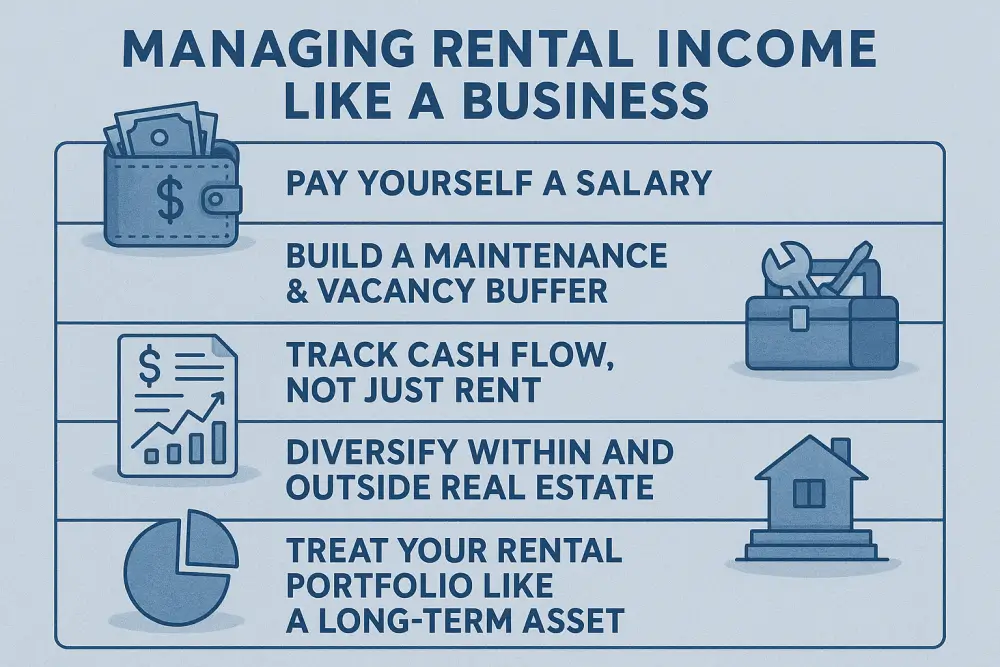
5. Treat Your Rental Portfolio Like a Long-Term Asset
Rental income is not just for today’s needs. It can fund your retirement, your children’s education, or the next phase of your life. But only if you’re building with the long term in mind.
Ask yourself regularly:
✔ Are my properties appreciating in value?
✔ Is my income keeping up with inflation?
✔ Am I reinvesting or just consuming?
When your income isn’t a payslip, discipline must come from you, not your employer. Rental income can be a powerful foundation for financial independence, but only if you manage it like the opportunity it truly is.
#Rental Income

CEO & Co-Founder, Abojani Investment
Robert Ochieng is a visionary entrepreneur and the co-founder of Abojani Investment, a leading financial education platform in Kenya that has empowered over 20,000 Africans to embark on their investment journeys. As CEO, he has demonstrated an unwavering commitment to financial literacy, successfully demystifying money and investments and making them accessible and relevant to individuals from all walks of life.
Running Thriving Investment Communities
Robert’s influence extends well beyond Abojani Investment’s core offerings. He has actively fostered a sense of community by running investment forums and groups with a vast following of over 300,000 Africans. These communities provide a safe space for individuals to exchange ideas, share experiences, and support each other on their investment journeys.
Vision for the Future
As co-founder of Abojani Investment, Robert envisions a financially empowered Africa. He strives to expand the reach of his financial education initiatives, enabling millions more to gain the knowledge and confidence needed to achieve their financial goals. His vision is to create a society where every individual has the tools and understanding to build lasting wealth and prosperity.
Professional Background
Robert Ochieng is a highly accomplished CEO at the helm of Abojani Investment, an investment and advisory firm in Kenya. He is a seasoned professional with over 14 years of experience in IT, Finance, and leadership.
His career includes key roles at prominent institutions such as Equity Bank, Gulf African Bank, Guaranty Trust Bank (GTBank) and Airtel.
Robert’s expertise has also been sought after by the National Treasury for consultancy on planning and budgeting systems, showcasing his exceptional knowledge and skills in the field. Passionate about driving meaningful conversations and collaborations between academia, industry, and the public sector, Robert actively engages in research projects focusing on digital transformation within the financial services sector. With his visionary leadership and strategic insights, Robert Ochieng continues to make a significant impact in the business world.