
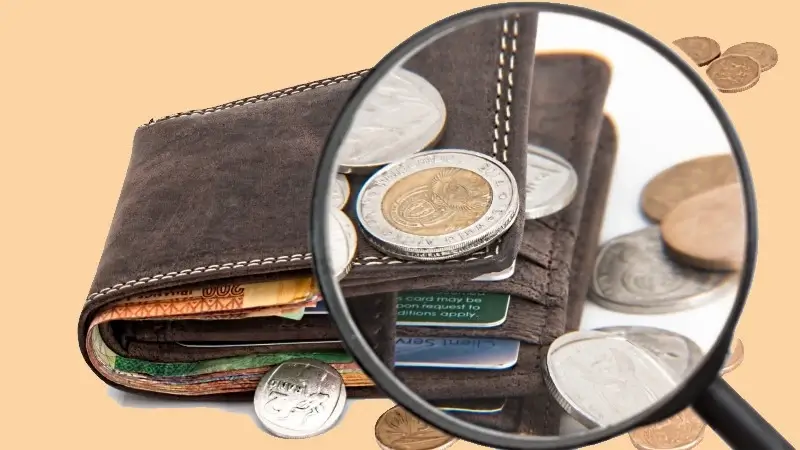
Here is why personal finance is very personal; a professional is someone with expertise in a certain field. One is therefore likely to visit a doctor if they fall sick. For personal finances, however, most solutions are with us.
Personal finances help us achieve our goals and no one understands our goals better than ourselves. You are therefore the professional of your personal finances.
Personal finance is the tradeoff between consumption on the other hand and savings and investments on the other hand. More today implies less tomorrow. The rule of money is simple, save me today and I will save you tomorrow.
Learn Personal Finance with Abojani Personal and Investing Masterclass
We are not trying to outsmart those with PhDs and CFAs in finance. We just want to know enough to be able to ask ourselves and others the right questions and make better decisions.
To succeed in managing your personal finances, you need three things
- The correct mindset,
- The toolset and
- The skillset to help you make good decisions that will help you connect your personal finances and personal goals.
The mindset is built by habits which put us in motion to create sustainable wealth eg the goal of saving Ksh. 60,000 might seem difficult but the habit of putting aside Ksh. 5,000 every month requires little effort. Habits, not goals, make otherwise difficult things easy. Sustainable wealth creation follows a rhythm.
When it comes to planning for one’s finances, it is better to stop wishing and start doing.
Review your income, spending, debts versus your long term and short term goals and see where you can make adjustments.
Write down your budget
Many people only create mental budgets. Putting your budget on paper or in a basic spreadsheet is essential if you want a healthy financial future. An accurate monthly budget can help you reach your financial goals, whether you’re saving for a car, buying a home or raising capital to start a business.
You can use budgeting apps such iSave, Fudget, Mint, YNAB or an excel spreadsheet. It is recommended that you save at least 10% of your net income for a start.
Even if you save a little, that’s fine too – the important thing is that you get into the habit of saving. Your future self will thank you for it.
By sticking to a budget
You can save thousands of Kenya Shillings each year and avoid overspending. Budgeting allows you to track your expenses and hence is very important in the journey to building your financial future.
The toolset refers to what you need to manage your personal finances well and includes budgeting apps and products from the financial services companies such as standing orders that allow you to automate savings.
You can also use lock accounts such as M-PESA lock account, Barclays Timiza Zidisha account or KCB M-PESA target account.
Money market funds such as CIC and Britam money market funds also serve as great platforms for saving money while earning interest that is above the inflation rate. They have capital preservation which means that your principle is protected from losses hence ensuring safety of funds.
Skillset refers to yourawareness of the financial products, investments and options at your disposal.
Remember personal finance is not a one size fits. Making a connection between financial markets products and investment options and what is personal to you is what matters. For example, paying your loan in time will help you improve your credit rating and help improve your chances of getting loans in future.
Your credit rating might be required by your future employer or investors interested in investing in your business. It is therefore important to understand your individual scenario and apply what is relevant to you.
What works for others may not work for you and vice-versa.
Why Personal Finance is Very Personal
CEO & Co-Founder, Abojani Investment
Robert Ochieng is a visionary entrepreneur and the co-founder of Abojani Investment, a leading financial education platform in Kenya that has empowered over 20,000 Africans to embark on their investment journeys. As CEO, he has demonstrated an unwavering commitment to financial literacy, successfully demystifying money and investments and making them accessible and relevant to individuals from all walks of life.
Running Thriving Investment Communities
Robert’s influence extends well beyond Abojani Investment’s core offerings. He has actively fostered a sense of community by running investment forums and groups with a vast following of over 300,000 Africans. These communities provide a safe space for individuals to exchange ideas, share experiences, and support each other on their investment journeys.
Vision for the Future
As co-founder of Abojani Investment, Robert envisions a financially empowered Africa. He strives to expand the reach of his financial education initiatives, enabling millions more to gain the knowledge and confidence needed to achieve their financial goals. His vision is to create a society where every individual has the tools and understanding to build lasting wealth and prosperity.
Professional Background
Robert Ochieng is a highly accomplished CEO at the helm of Abojani Investment, an investment and advisory firm in Kenya. He is a seasoned professional with over 14 years of experience in IT, Finance, and leadership.
His career includes key roles at prominent institutions such as Equity Bank, Gulf African Bank, Guaranty Trust Bank (GTBank) and Airtel.
Robert’s expertise has also been sought after by the National Treasury for consultancy on planning and budgeting systems, showcasing his exceptional knowledge and skills in the field. Passionate about driving meaningful conversations and collaborations between academia, industry, and the public sector, Robert actively engages in research projects focusing on digital transformation within the financial services sector. With his visionary leadership and strategic insights, Robert Ochieng continues to make a significant impact in the business world.