
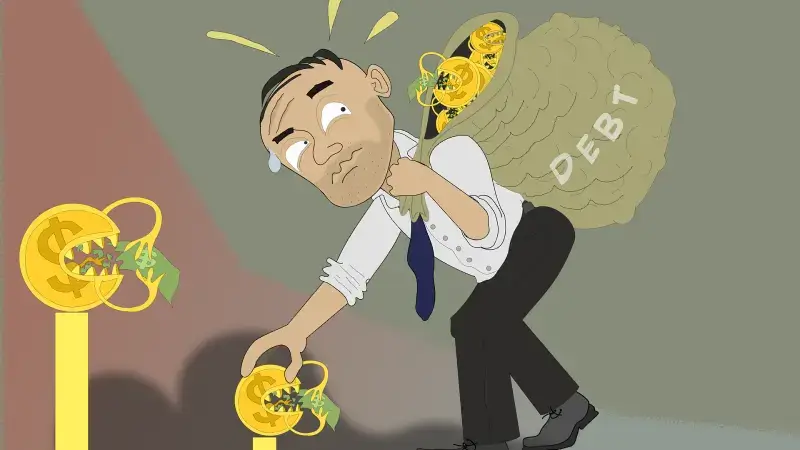
The need debt management for SMEs individuals and entrepreneurs is ever more important. Debts have become a way of life for many individuals and businesses. This phenomenon has been necessitated by financial access and credit access in Kenya which stands at 83.7% and 60.8% respectively, according to the 2021 FinAccess Household Survey by Financial Sector Deepening Kenya (FSD Kenya).
Also read: Smart Borrowing: 4 Ways to Navigate Financial Opportunities with Prudence
To sustain this ever-growing debt market, in Kenya, we have 39 banks according to CBK, 360 SACCOs, as per the data from SASRA, 14 Deposit Taking Microfinances (DTMs)according to CBK, Non-Deposit Taking Microfinances (NDTMs), Credit companies, more than 100 digital lenders, shylocks and businesses offering goods or services on credit.
As a result of this credit market liberalization, individuals are solving most of their financial needs using any available debt underwriter with complete disregard for the debt obligations.
Some of the lenders do not observe business ethics and they charge exorbitant interest rates and fees. Consequently, people end up in a debt trap.
When lenders activate their debt recovery process, these people sink into depression associated with demand letters, constant calls and visits from the debt collectors and auctioneers and CRB blacklists. There are also marriage break-ups especially if one of the partners took a loan without the consent of the other.
In other cases, we have seen cases of job loss, alcohol addiction and to some extent death through suicides.
According to, The Kenya Institute for Public Policy Research and Analysis (KIPPRA), there are over 7.4 million MSMEs employing approximately 14.9 million Kenyans in various sectors of the economy.
When these enterprises are doing well, they are tempted to open many branches at the same time in order to reach more markets, which is a dangerous move especially if their expansion is anchored on borrowing loans to open new branches. This is called OVERTRADING and it’s usually the beginning of their business downfall.
Additionally, in order to increase and retain customers, some SMEs, like wholesales, trade their goods or services on credit without having a properly instituted Credit department which would execute proper appraisal of their customers. Some entrepreneurs, like shop owners, sell on credit.
If their customers fail to honour their debt obligations then business working capital is trapped and the business operation grinds to a halt leading to massive losses or business failures.
We have heard cases where a leading media house was servicing a huge and expensive overdraft from a tier one bank in Kenya. After the media house failed to pay the debt was converted into equity and the owner of the media house was edged out of her business. These days, one of the leading Monday newspapers has always been jammed with house and motor vehicle auctioneer advertisements which signals how SMEs are struggling to meet their debt obligations.
Therefore, debt management becomes a very vital process in maintaining a balanced financial life both as an individual and as a business. It’s also a process that will help businesses or individuals to get out of the debt trap.
Managing debts is a process that can either be initiated by an individual on his or her own or through the help of a professional Personal Financial Advisor. There are several strategies employed in managing debts.
Accept your indebtedness situation.
Many people continue to live in denial that they are in a huge debt load. They continue to borrow more to sort out their past debts. These habits continue until all their alternatives are exhausted. Banks and friends shun them and begin to institute debt recovery processes leading to dangerous emotional and psychological distress.
When you realize that huge chunk of your income goes to paying debts, take a step back and evaluate your debt situation. Calculate your debt and your incomes and psychologically make peace with your debt situation.
Next, change your lifestyle.
Do not dig deeper into debts. From the list of your expenses, note those that carry huge amounts and adjust accordingly. For example, reduce the number of days you go out with your friends and family, if your children were in a high-end private school shop around for a competitive public or private school that will be within your modest budget in terms of school fees payment, change your residence to a place where rent is within your means, maintain only the essentials in your budget. Make sure that the amount saved from these adjustments goes to paying your debts.
Debt consolidation into one loan is also another strategy used in debt management.
Digital or mobile loans, payday loans, overdrafts like Fuliza, credit cards and other 1 month loans are usually very expensive across all credit providers. Because of their convenience, they are the most popular loan products. They are also very addictive. Instead of servicing these expensive, popular and addictive loans, negotiate with your lender for consolidation into one loan payable in instalments that has better terms. In this case, you have saved on interest and the stress of dealing with many lenders at the same time.
To keep track of your business and individual finances, build a budget and stick to its entries.
A budget should help you to establish the helpful habit of laying money aside to pay suppliers, creditors, your landlord, electricity and other predictable expenses. A good budget will help you to manage your cash flow. After a month, compare what you had budget to expense with what you actually expensed. This principle will help you to forecast how your finances will look like next month.
Initiate debt snowball or debt avalanche to manage your debts.
Debt Management should take up between five to 10% of your income. The best way to commence this process is first to speak to all those you owe money and prepare a manageable payment plan. These cover debt owed in utility bills, salary advances, and soft loans from friends and family or even borrowed airtime from your service provider. Do not try to pay a lump sum when you cannot afford it. You might find yourself falling into more debt.
Once you make debt management part of your personal finance process, then, both as an individual and as a business will lead to a fulfilling life.
#Debt Management for SMEs
CEO & Co-Founder, Abojani Investment
Robert Ochieng is a visionary entrepreneur and the co-founder of Abojani Investment, a leading financial education platform in Kenya that has empowered over 20,000 Africans to embark on their investment journeys. As CEO, he has demonstrated an unwavering commitment to financial literacy, successfully demystifying money and investments and making them accessible and relevant to individuals from all walks of life.
Running Thriving Investment Communities
Robert’s influence extends well beyond Abojani Investment’s core offerings. He has actively fostered a sense of community by running investment forums and groups with a vast following of over 300,000 Africans. These communities provide a safe space for individuals to exchange ideas, share experiences, and support each other on their investment journeys.
Vision for the Future
As co-founder of Abojani Investment, Robert envisions a financially empowered Africa. He strives to expand the reach of his financial education initiatives, enabling millions more to gain the knowledge and confidence needed to achieve their financial goals. His vision is to create a society where every individual has the tools and understanding to build lasting wealth and prosperity.
Professional Background
Robert Ochieng is a highly accomplished CEO at the helm of Abojani Investment, an investment and advisory firm in Kenya. He is a seasoned professional with over 14 years of experience in IT, Finance, and leadership.
His career includes key roles at prominent institutions such as Equity Bank, Gulf African Bank, Guaranty Trust Bank (GTBank) and Airtel.
Robert’s expertise has also been sought after by the National Treasury for consultancy on planning and budgeting systems, showcasing his exceptional knowledge and skills in the field. Passionate about driving meaningful conversations and collaborations between academia, industry, and the public sector, Robert actively engages in research projects focusing on digital transformation within the financial services sector. With his visionary leadership and strategic insights, Robert Ochieng continues to make a significant impact in the business world.