
Equity Group Q1 2026 results show a 24% year-on-year rise in profit after tax to KSh 19.1 billion for the first quarter of 2026, up from KSh 15.4 billion in the same period last year. The results reflect the continued progress of the Group’s transformation into a technology-led, pan-African financial services business.
The Group’s balance sheet grew 16% to KSh 2.04 trillion, crossing the two-trillion mark for the first time, supported by 13% growth in customer deposits to KSh 1.48 trillion and 9% growth in net loans. Equity now serves 22.7 million customers across its markets.
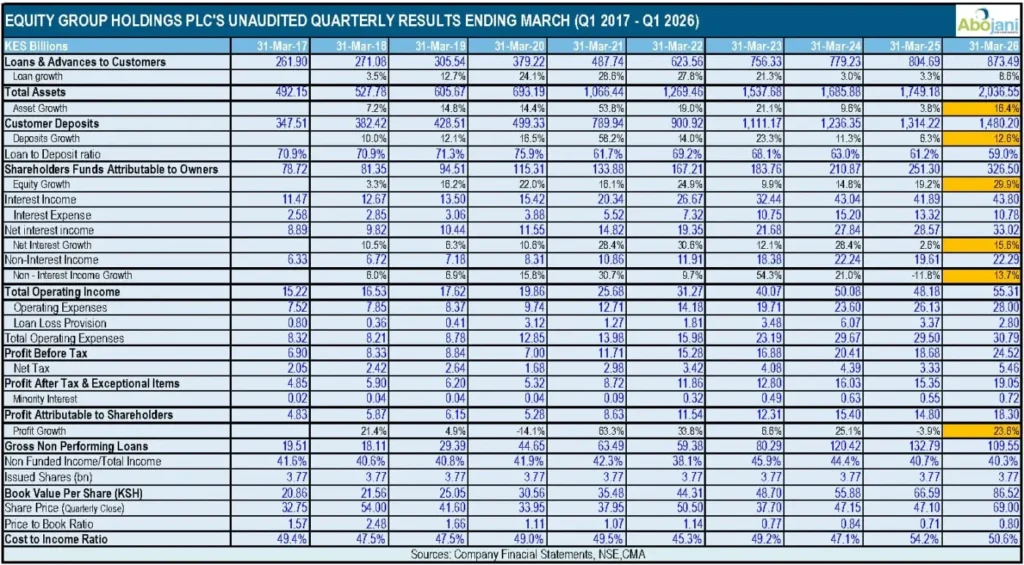
Non-performing loans fell from 14% to 10% year-on-year. NPL coverage improved to 72%. Loan loss provisions dropped 18%. For a bank expanding aggressively across multiple African markets, those are strong numbers, and they show the growth isn’t being bought at the cost of quality.
Also read: Inside Equity Group Growth Story: A Regional Giant in the Making
The businesses outside Kenya now account for half of the Group’s banking profits. This is the result of a multi-year bet on regional expansion, digital infrastructure, and operational discipline that is now paying off in a very visible way.
For years, Equity Kenya was the engine that pulled everything else, but that’s changing. Combined, the regional subsidiaries now contribute 52% of total Group banking assets and 50% of profitability. Equity Bank Tanzania led the pack with an outstanding 150% surge in profit after tax to KSh 1.04 billion. Equity Bank Rwanda grew 36% to KSh 1.5 billion, EquityBCDC in DRC rose 32% to KSh 5.0 billion, and Equity Bank Kenya delivered a 21% increase to KSh 10.3 billion.
Digital Strategy
98.3% of all Equity transactions now happen outside a branch. Nearly 90% go through fully digital platforms. The cost-to-income ratio has dropped to 50.6% from 54.2% a year ago, and that gap will likely keep widening as more customers move online.
What’s interesting is how Equity is thinking about the people side of this shift. 80% of Group staff have completed a generative AI course. Hundreds are enrolled in a Master’s in Financial Engineering. This isn’t a bank trying to automate its way through a headcount reduction, it is more like a deliberate effort to bring the workforce along for the transformation rather than leave them behind.
Insurance Business
Equity Insurance Group grew gross written premiums 30% to KSh 4.5 billion, with profit before tax up 53%. Health, life, and general insurance are all scaling. It’s still in its early days, but insurance is taking up space as the third pillar for the Group alongside banking and payments.
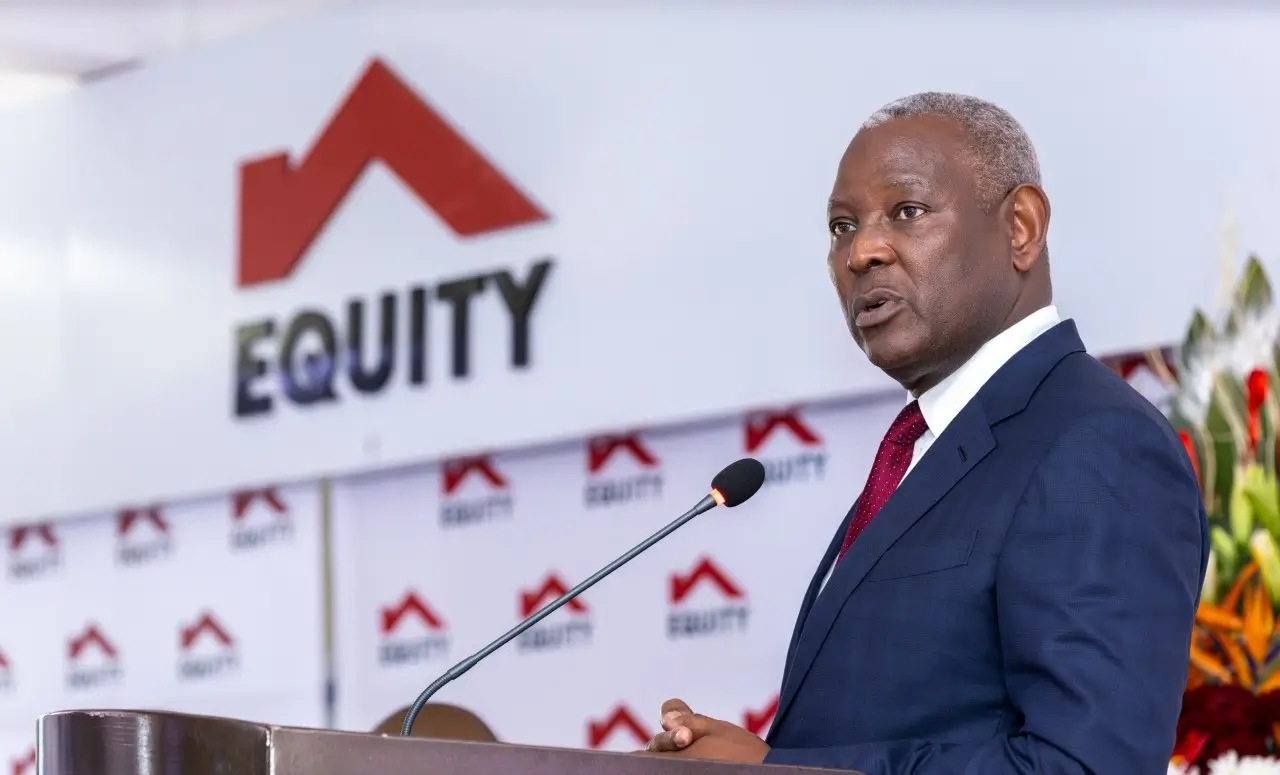
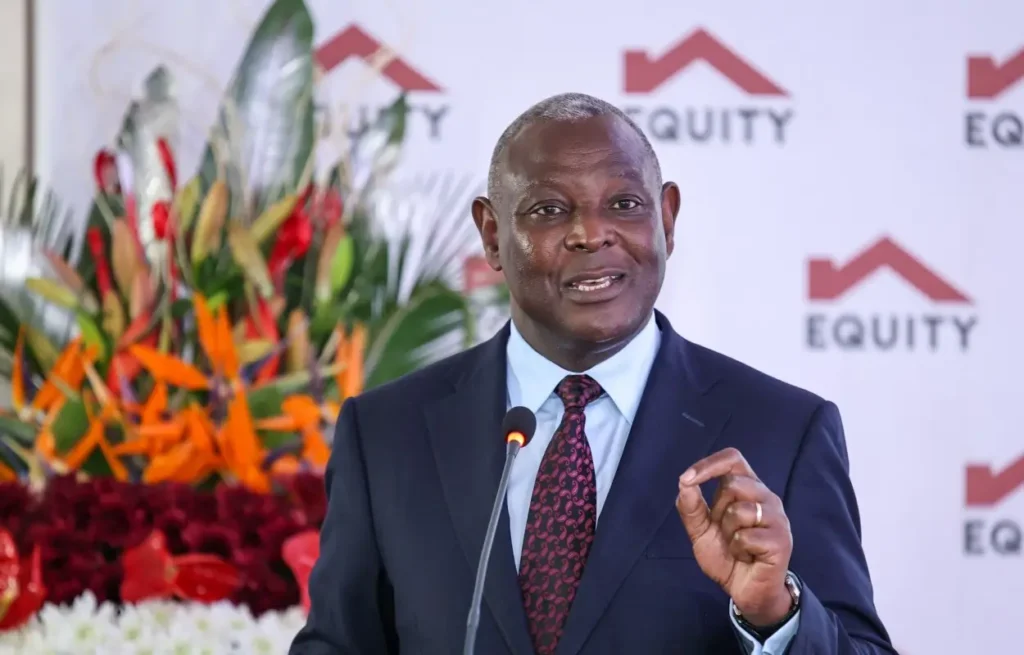
Group Managing Director and CEO Dr. James Mwangi said the results reflect the success of a deliberate transformation strategy. “We are building a future‑ready institution; scalable, secure, and impact‑led, anchored in digital capabilities, staff upskilling, and a culture of disciplined execution,” he said, adding that the Group is evolving toward what he described as a Transformation Finance Institution aimed at mobilizing capital and accelerating inclusive prosperity across Africa.
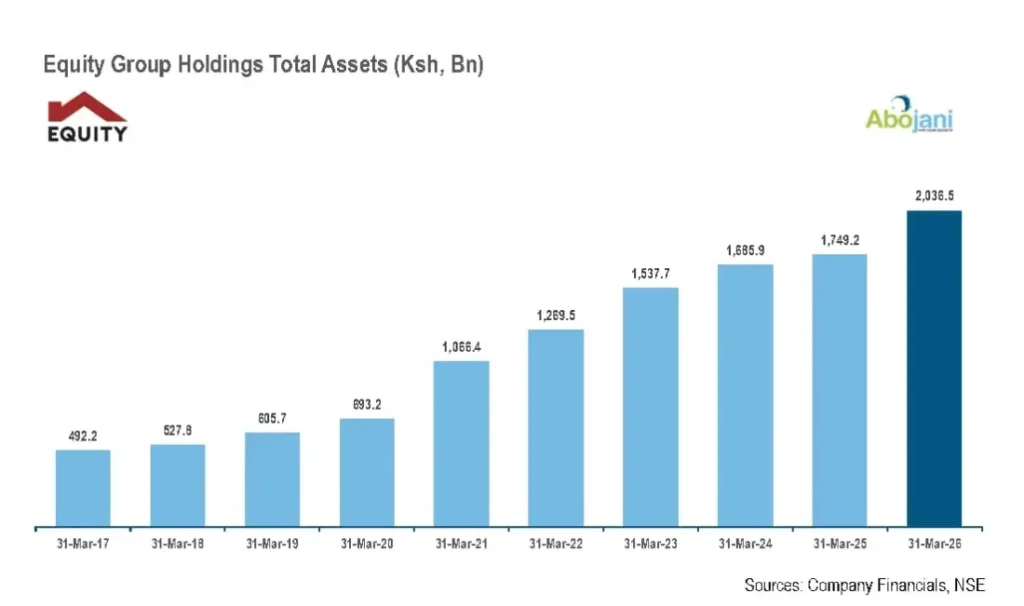
Looking ahead, Equity has set out a 2030 target of operating in 15 countries and serving 100 million customers. That sounds ambitious, because it is. But look at where the Group was five years ago versus where it stands today, and it becomes harder to dismiss.
The Q1 2026 numbers aren’t just a good quarter. They’re evidence that the architecture Equity has been assembling is starting to hold weight.
Equity Group Q1 2026
CEO & Co-Founder, Abojani Investment
Robert Ochieng is a visionary entrepreneur and the co-founder of Abojani Investment, a leading financial education platform in Kenya that has empowered over 20,000 Africans to embark on their investment journeys. As CEO, he has demonstrated an unwavering commitment to financial literacy, successfully demystifying money and investments and making them accessible and relevant to individuals from all walks of life.
Running Thriving Investment Communities
Robert’s influence extends well beyond Abojani Investment’s core offerings. He has actively fostered a sense of community by running investment forums and groups with a vast following of over 300,000 Africans. These communities provide a safe space for individuals to exchange ideas, share experiences, and support each other on their investment journeys.
Vision for the Future
As co-founder of Abojani Investment, Robert envisions a financially empowered Africa. He strives to expand the reach of his financial education initiatives, enabling millions more to gain the knowledge and confidence needed to achieve their financial goals. His vision is to create a society where every individual has the tools and understanding to build lasting wealth and prosperity.
Professional Background
Robert Ochieng is a highly accomplished CEO at the helm of Abojani Investment, an investment and advisory firm in Kenya. He is a seasoned professional with over 14 years of experience in IT, Finance, and leadership.
His career includes key roles at prominent institutions such as Equity Bank, Gulf African Bank, Guaranty Trust Bank (GTBank) and Airtel.
Robert’s expertise has also been sought after by the National Treasury for consultancy on planning and budgeting systems, showcasing his exceptional knowledge and skills in the field. Passionate about driving meaningful conversations and collaborations between academia, industry, and the public sector, Robert actively engages in research projects focusing on digital transformation within the financial services sector. With his visionary leadership and strategic insights, Robert Ochieng continues to make a significant impact in the business world.