
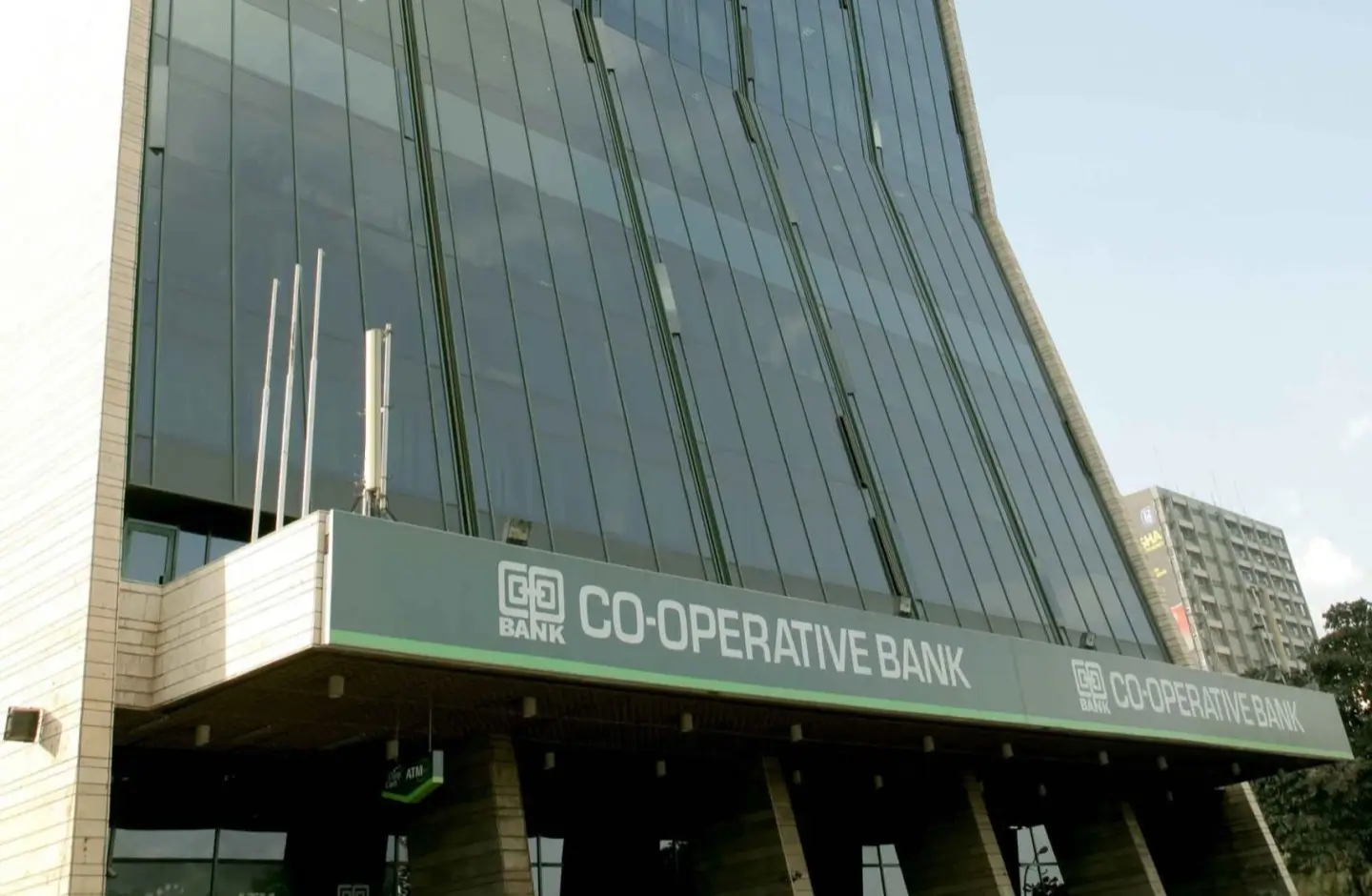
For generations of Kenyans, it was simply THE Co-operative Bank. It was the bank serving cooperative societies, farmers and communities that pooled their resources to access financial services. Today, Co-op Bank is the third-largest bank by market capitalization (approx. KSh 215 billion) on the Nairobi Securities Exchange, with a growing portfolio of financial services and ambitions that extend beyond Kenya.
Its journey from a modest cooperative institution to a major player in the financial sector is a story of reinvention, expansion and a business that has had to evolve with the economy it serves.
The story began in 1968, when the bank opened its doors with a capital base of just KSh 255,000, supplemented by a government interest-free loan of KSh 214,000. Its purpose was straightforward: to provide banking services to Kenya’s cooperative movement, particularly agricultural societies whose members needed financial support to grow their economic activities. But as Kenya’s economy developed, so did the bank’s ambitions.
In 1994, Co-operative Bank became a fully-fledged commercial bank, opening its doors to individuals, businesses and institutions beyond the cooperative sector. This expanded its potential customer base, but the transition came with challenges. By 2000, the bank had recorded a loss of KSh 2.3 billion, placing its future on a very different trajectory from the growth story we know today.
The turnaround that followed was remarkable. Under the leadership of Gideon Muriuki, who became Managing Director in 2001, the bank returned to profitability in 2002, recording a profit before tax of KSh 103 million. By 2007, that figure had grown to KSh 2.3 billion. The recovery was supported by strategic changes and a fresh capital injection from cooperative shareholders, demonstrating the role its founding owners continued to play in the bank’s future.
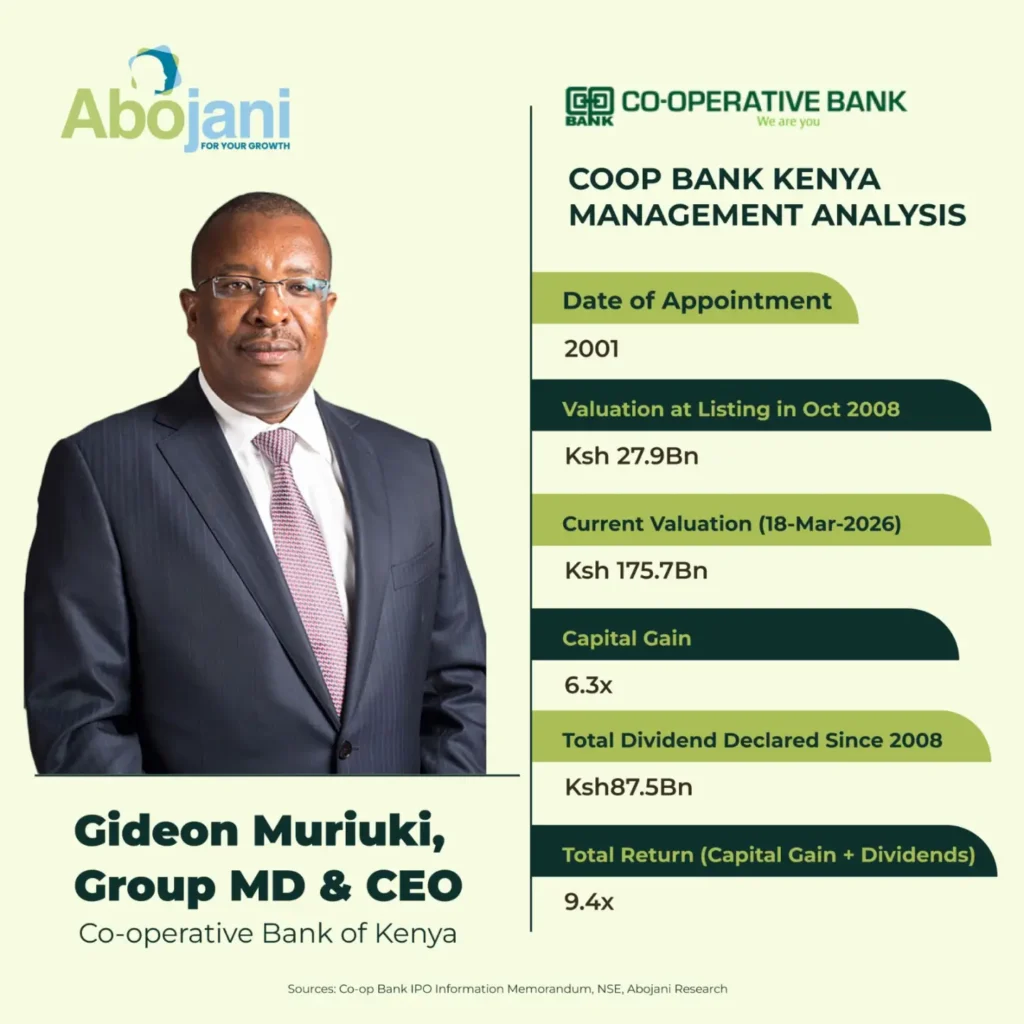
Then came another major milestone. In December 2008, Co-operative Bank listed on the Nairobi Securities Exchange, opening its ownership to public investors while preserving the cooperative movement’s substantial stake through Co-op Holdings Co-operative Society Limited. The listing gave the bank access to capital markets and marked its transition into a publicly traded institution, without severing its connection to the societies that had established it.
The years that followed brought expansion on multiple fronts. Between 2009 and 2013, the bank opened 77 new branches, while customer accounts grew from approximately 700,000 to 4.1 million. It also invested in technology and service delivery, recognising that growth required more than a larger physical footprint. Its Soaring Eagle transformation agenda, launched in 2014–2015, formalised this ambition to improve efficiency, strengthen customer service and reach new markets.
Co-op Bank’s evolution has since extended beyond traditional banking. The acquisition of Kingdom Bank, formerly Jamii Bora Bank, strengthened its presence in the micro, small and medium-sized enterprise market. Its wider group now includes businesses in fund management, stockbroking, insurance brokerage and banking in South Sudan. These operations give the Group additional sources of income and opportunities to serve customers whose financial needs extend beyond everyday banking.
Co-op Bank’s ambitions were also beginning to extend beyond Kenya. In August 2012, it launched a joint venture with the Government of South Sudan, officially opening the Co-operative Bank of South Sudan in Juba in September 2013. The partnership gave Co-op Bank a 51% stake in the subsidiary, with the South Sudanese government holding the remaining 49%. The expansion drew on the bank’s cooperative-banking heritage, with plans to serve farmers, cooperative societies, businesses and individuals in a market where access to financial services remained limited. The subsidiary currently operates six branches and provides banking services that include government revenue collection.
In the 2025 financial year, Co-op Bank Group reported total assets of KSh 827.4 billion and a record profit before tax of KSh 40.3 billion. In the six months ended June 2026, Group profit before tax rose by 17.3% to KSh 23.1 billion, while profit after tax increased by 28% to KSh 18 billion. Total assets reached KSh 869.5 billion, and net loans and advances grew by 18.1% to KSh 462.2 billion. The bank’s customer base exceeded 10 million accounts, supported by 223 branches and more than 16,000 Co-op Kwa Jirani agents. More than 90% of customer transactions were processed through alternative banking channels, reflecting the growing role of digital and agent banking in its operations.
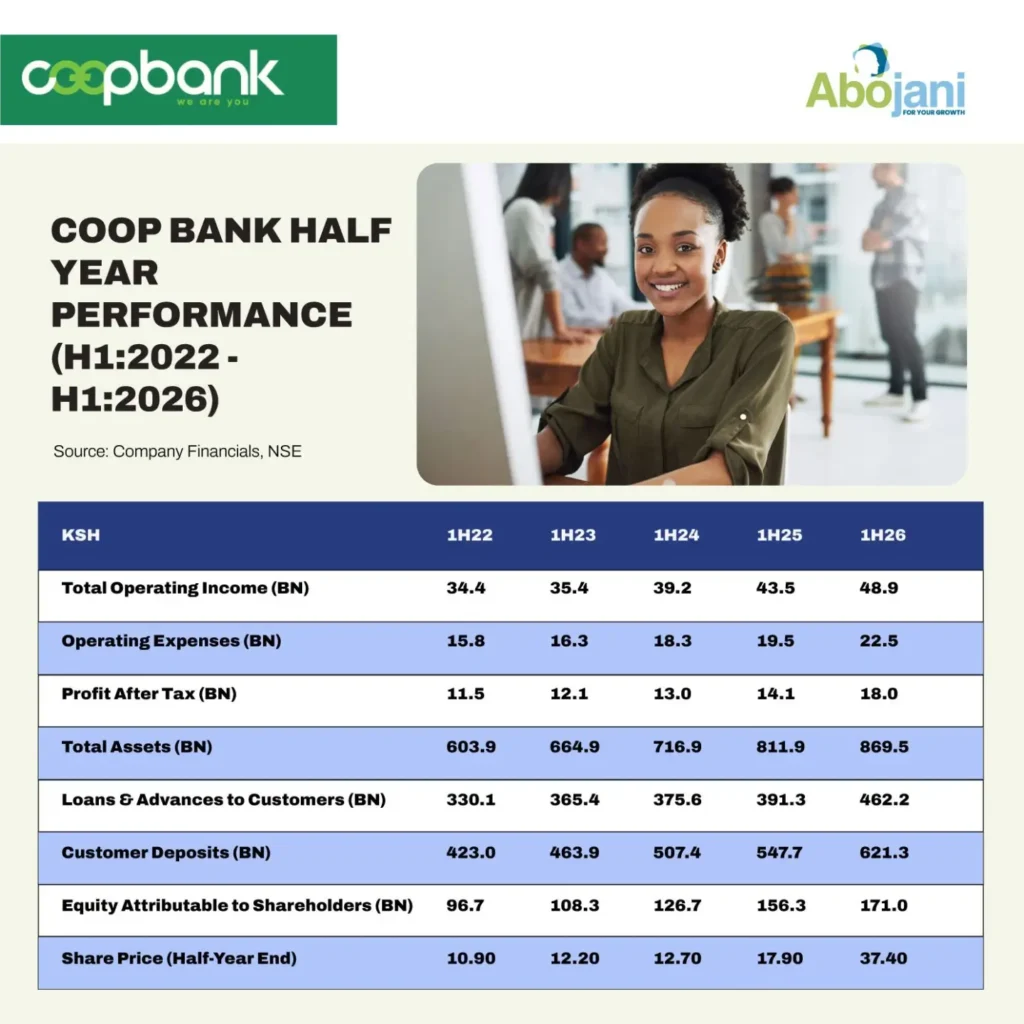
It is now pursuing its Good to Great strategy for 2025–2029, with the next phase of growth taking shape through a proposed restructuring that would create Co-op Bank Group PLC as a non-operating holding company, with a separate subsidiary handling banking operations in Kenya. The changes are designed to strengthen group oversight and support further diversification and regional expansion, subject to the necessary regulatory approvals.
From its beginnings as a bank for cooperative societies to its position today as a major listed financial group, Co-op Bank has changed considerably. Yet its cooperative roots remain part of its strategy, even as it invests in technology, expands lending, develops new businesses and pursues growth across the region. With a KSh 1 trillion asset ambition and a proposed new Group structure, the next chapter is already taking shape. The question is no longer simply how far the bank has come, but how it will grow from here.

CEO & Co-Founder, Abojani Investment
Robert Ochieng is a visionary entrepreneur and the co-founder of Abojani Investment, a leading financial education platform in Kenya that has empowered over 20,000 Africans to embark on their investment journeys. As CEO, he has demonstrated an unwavering commitment to financial literacy, successfully demystifying money and investments and making them accessible and relevant to individuals from all walks of life.
Running Thriving Investment Communities
Robert’s influence extends well beyond Abojani Investment’s core offerings. He has actively fostered a sense of community by running investment forums and groups with a vast following of over 300,000 Africans. These communities provide a safe space for individuals to exchange ideas, share experiences, and support each other on their investment journeys.
Vision for the Future
As co-founder of Abojani Investment, Robert envisions a financially empowered Africa. He strives to expand the reach of his financial education initiatives, enabling millions more to gain the knowledge and confidence needed to achieve their financial goals. His vision is to create a society where every individual has the tools and understanding to build lasting wealth and prosperity.
Professional Background
Robert Ochieng is a highly accomplished CEO at the helm of Abojani Investment, an investment and advisory firm in Kenya. He is a seasoned professional with over 14 years of experience in IT, Finance, and leadership.
His career includes key roles at prominent institutions such as Equity Bank, Gulf African Bank, Guaranty Trust Bank (GTBank) and Airtel.
Robert’s expertise has also been sought after by the National Treasury for consultancy on planning and budgeting systems, showcasing his exceptional knowledge and skills in the field. Passionate about driving meaningful conversations and collaborations between academia, industry, and the public sector, Robert actively engages in research projects focusing on digital transformation within the financial services sector. With his visionary leadership and strategic insights, Robert Ochieng continues to make a significant impact in the business world.