

Investing is often associated with major financial milestones: buying a home, preparing for retirement, starting a business or leaving an inheritance. But by the time these goals become urgent, one of the most valuable advantages an investor has may already have been lost: time.
At different stages of life, the role of your investments will change. When you start, the focus is stability and growth, and as your wealth grows, diversification becomes key. As retirement approaches, the focus may shift towards income, capital preservation and liquidity.
The earlier this process begins, the more opportunities an investor has to build wealth, respond to changing circumstances and prepare for the future. This is where having a good investment partner can make a difference. NCBA Investment Bank offers investment solutions across different asset classes and risk profiles, allowing investors to build and adjust their portfolios as their financial needs change.
1. Investing Looks Different at Different Stages of Life
In the early stages of a career, investing may be about establishing a financial foundation. Someone earning their first regular income may have limited capital, but they also have time on their side. Starting with manageable contributions can help develop the discipline of investing while giving assets more time to grow.
At this stage, the objective may be to build an emergency fund, save towards a specific goal or begin accumulating long-term wealth. The most important decision is often not how much to invest, but how to start consistently and choose investments that match the purpose and time horizon of the money.
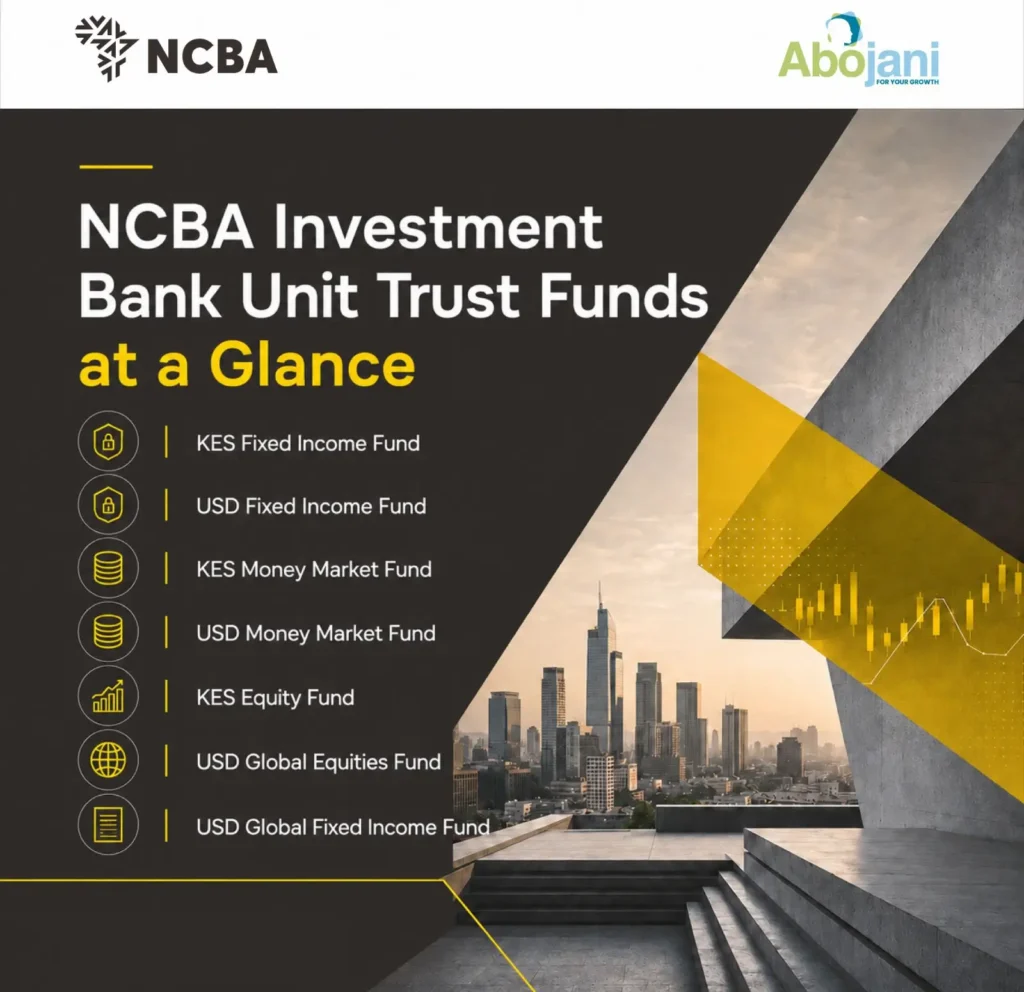
An emergency fund, for example, needs to be accessible when an unexpected expense arises. This is where a money market fund can be useful. These funds are generally considered lower-risk investments and are designed to provide liquidity while earning a return on money that may need to be accessed relatively easily. They are also commonly available in both KES and USD, giving investors flexibility depending on the currency in which they save or expect to spend.
2. Building Long-Term Wealth
As income becomes more established and immediate financial needs are better managed, investors can begin thinking more deliberately about long-term wealth creation.
Equities are often part of this conversation because they provide exposure to companies and the potential for capital appreciation over time. However, investing directly in individual shares is not the only way to gain exposure to equities. Equity-based funds can provide professionally managed exposure to a broader selection of companies, which can help investors diversify rather than relying on the performance of a single company.
The longer investment horizon also gives investors more room to manage short-term market fluctuations.
3. As Wealth Grows, Diversification Matters More
An individual may have shares, property, pension, business interests and cash savings, while also earning most of their income in Kenya and holding most of their investments in the local market. This can create concentration risk even when the investor believes they are diversified.
International investments can provide another layer of diversification by giving investors exposure to markets, companies and economies outside Kenya. Offshore funds can also provide exposure to different asset classes and currencies, including USD-denominated investments.
For some investors, this may be particularly relevant where future financial obligations are in foreign currency, where they already hold dollar income or savings, or where they simply want their wealth to be exposed to opportunities beyond a single market.
Diversification does not remove investment risk. Markets can fall, currencies can move against an investor and different asset classes can perform differently at different times. Its value is in reducing dependence on one market, sector, company or currency.
4. Stability Has a Role Too
Long-term wealth creation is not only about pursuing growth. As portfolios become larger, investors may also need to think about how much of their wealth should provide stability and income.
Fixed-income investments can play an important role here. Government and corporate bonds, fixed deposits and other interest-bearing instruments can provide income while diversifying a portfolio away from equities.
For an investor who does not want to manage individual fixed-income securities, a fixed-income fund can provide professionally managed exposure to these types of investments. Such funds can be particularly relevant for investors looking for a balance between income generation, capital preservation and liquidity.
The appropriate balance will depend on the investor’s objectives and risk tolerance.
5. Wealth Planning Becomes More Complex as Your Financial Position Changes
An investor may have substantial assets but limited liquidity. They may own several properties but lack sufficient retirement income. They may have invested heavily in one sector or business, leaving their wealth exposed to a single source of risk. They may also have different financial commitments that require competing amounts of capital.
A broader investment strategy can help bring these decisions together. This involves reviewing the investor’s overall financial position, understanding their risk tolerance, considering their time horizons and assessing how different investments contribute to their objectives.
This is where professional investment guidance can become more valuable. The decision to invest, sell, diversify or move money between asset classes can affect several other parts of a person’s financial plan.
6. One Investment Relationship Can Support Different Financial Needs
The different scenarios above illustrate why wealth planning cannot be reduced to finding a single “best” investment. This is where having an investment partner with capabilities across different areas can be valuable.
NCBA Investment Bank, a wholly-owned subsidiary of NCBA Group PLC, brings together Wealth Management and Brokerage & Advisory services, allowing investors to access different investment solutions and market services as their needs evolve.
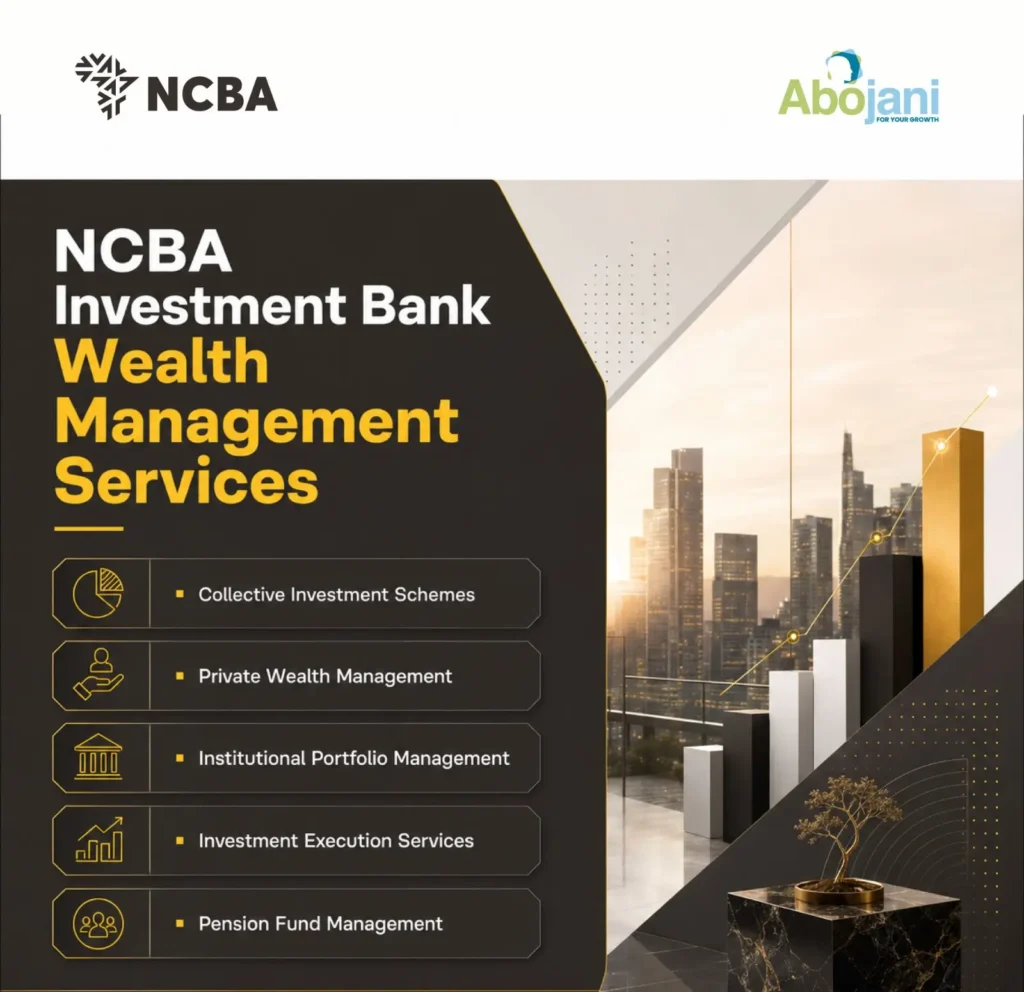
Through Wealth Management, investors can access solutions across different risk and return profiles, including money market funds, fixed-income funds, the NCBA Equity Fund, the NCBA Dollar Fixed Income Fund and NCBA Offshore Funds.
For investors who prefer to invest directly in securities, brokerage services provide access to areas including equities, derivatives and fixed income. This gives investors the option of combining professionally managed funds with direct investments depending on their knowledge, objectives and preferences.
The value of bringing these capabilities together is that an investor can access different solutions as their financial circumstances change, rather than approaching every stage of wealth creation as a completely separate decision.
There is no single investment strategy that remains appropriate throughout a person’s entire life. The earlier these conversations begin, the more options an investor has. Wealth planning is ultimately about making sure that your money has a purpose and that the investments you choose continue to reflect that purpose as your life changes.
Explore NCBA Investment Bank’s solutions at https://ncbagroup.com/investment-banking/
To speak with the NCBA Investment Bank team, call +254 711 056444 or +254 732 156444, or email investmentteam@ncbagroup.com
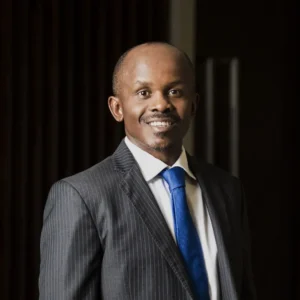
CEO & Co-Founder, Abojani Investment
Robert Ochieng is a visionary entrepreneur and the co-founder of Abojani Investment, a leading financial education platform in Kenya that has empowered over 20,000 Africans to embark on their investment journeys. As CEO, he has demonstrated an unwavering commitment to financial literacy, successfully demystifying money and investments and making them accessible and relevant to individuals from all walks of life.
Running Thriving Investment Communities
Robert’s influence extends well beyond Abojani Investment’s core offerings. He has actively fostered a sense of community by running investment forums and groups with a vast following of over 300,000 Africans. These communities provide a safe space for individuals to exchange ideas, share experiences, and support each other on their investment journeys.
Vision for the Future
As co-founder of Abojani Investment, Robert envisions a financially empowered Africa. He strives to expand the reach of his financial education initiatives, enabling millions more to gain the knowledge and confidence needed to achieve their financial goals. His vision is to create a society where every individual has the tools and understanding to build lasting wealth and prosperity.
Professional Background
Robert Ochieng is a highly accomplished CEO at the helm of Abojani Investment, an investment and advisory firm in Kenya. He is a seasoned professional with over 14 years of experience in IT, Finance, and leadership.
His career includes key roles at prominent institutions such as Equity Bank, Gulf African Bank, Guaranty Trust Bank (GTBank) and Airtel.
Robert’s expertise has also been sought after by the National Treasury for consultancy on planning and budgeting systems, showcasing his exceptional knowledge and skills in the field. Passionate about driving meaningful conversations and collaborations between academia, industry, and the public sector, Robert actively engages in research projects focusing on digital transformation within the financial services sector. With his visionary leadership and strategic insights, Robert Ochieng continues to make a significant impact in the business world.