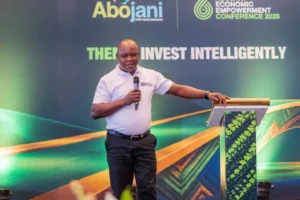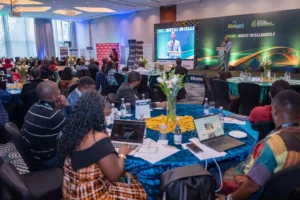

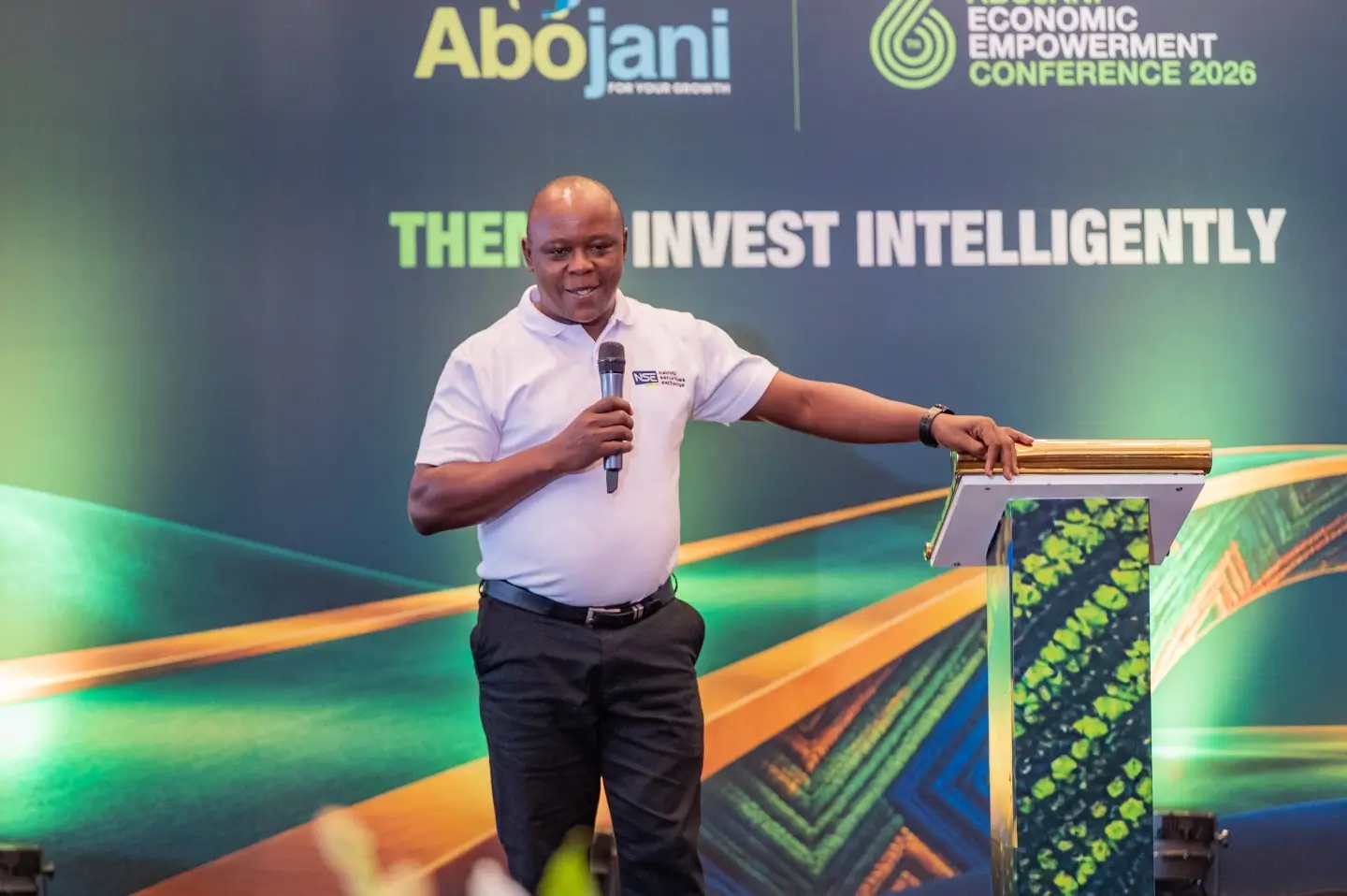
When Jackson Kiminje walked into the room at the 6th Abojani Economic Empowerment Conference, he did not come alone. The Nairobi Securities Exchange (NSE) Business Development Leader for Retail, SACCOs and Chamas had brought his sons with him, giving them a front-row seat to a conversation he believes should start much earlier in life.
That detail captured much of what Kiminje was trying to communicate during his keynote. Financial education should not begin when someone gets their first salary, takes out their first loan or starts thinking about retirement. It should start early, when people are still developing their understanding of money and what it can do.
Kiminje opened with a personal explanation of why he chose to work at the NSE: the opportunity to transform people’s lives. He recalled his first meeting with Robert, when they were working on developing a programme for teenagers. The experience reflected a broader belief that financial empowerment should not begin when someone is already struggling to make ends meet. It should start much earlier, with knowledge, exposure and the ability to make informed choices.
He challenged attendees to think beyond the financial circumstances they inherited. His message was deliberately provocative: adults cannot spend their lives blaming their parents for the financial position they were born into. At some point, they must take responsibility for changing their own financial futures.
The case for becoming an investor
One of Kiminje’s central arguments was that people need to change how they see themselves in the economy. Many Kenyans interact with large listed companies every day without necessarily considering that they can become shareholders in those businesses.
Whether it is buying airtime from Safaricom or purchasing products from major consumer companies, people are already supporting businesses that participate in the economy. Yet, they often remain on the consumer side of the relationship.
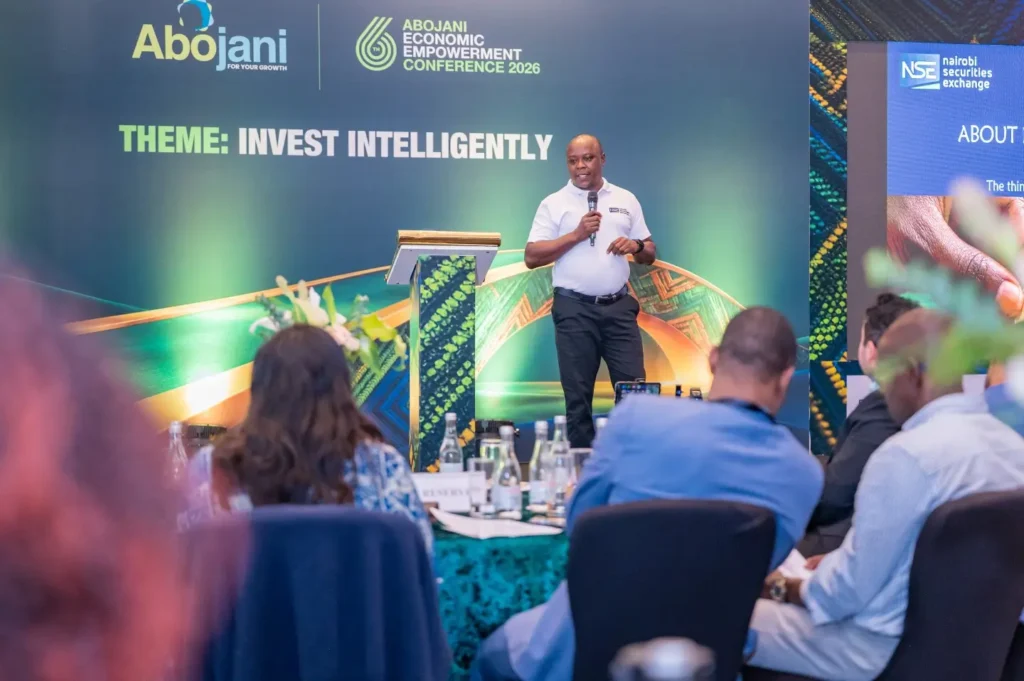
The capital markets offer another possibility: becoming an owner of the businesses they use and the companies driving economic activity.
As Kiminje explained, the stock market is fundamentally a marketplace where buyers and sellers meet to trade financial products. It is not an inaccessible institution reserved for a select group of wealthy individuals. Through the products available in the market, investors can participate in businesses, lend to issuers and gain exposure to different asset classes.
This thinking is central to the NSE’s efforts to grow retail participation as part of its 2025-2029 Strategy. Kiminje said the Exchange is looking to grow the number of retail investors, with an ambition of reaching 9 million retail investors.
He pointed to the importance of bringing together individuals through organised groups such as SACCOs, cooperatives and investment chamas. These structures provide aggregation points through which people can access information, learn about investment opportunities and participate in the market.
Increasing participation also supports the wider objective of encouraging more companies and institutions to raise capital through the market.
The investment opportunities available
For investors who are unfamiliar with the capital markets, Kiminje outlined several of the products available through Kenya’s market.
Equities allow investors to acquire shares in listed companies and participate in their performance through potential capital gains and dividends. The bond market provides another avenue, with different types of bonds issued by different entities, including government and corporate issuers. Investors can also explore Real Estate Investment Trusts (REITs), exchange-traded funds (ETFs), derivatives and Global Depositary Receipts (GDRs).
These products serve different purposes and carry different levels of risk. They should therefore not be approached as interchangeable ways of making money. Investors need to understand what they are buying, how the product works and what role it plays in their overall investment plan.
The broader lesson was that investors should take time to understand the products available rather than simply follow what is popular.
Regulation does not remove investment risk
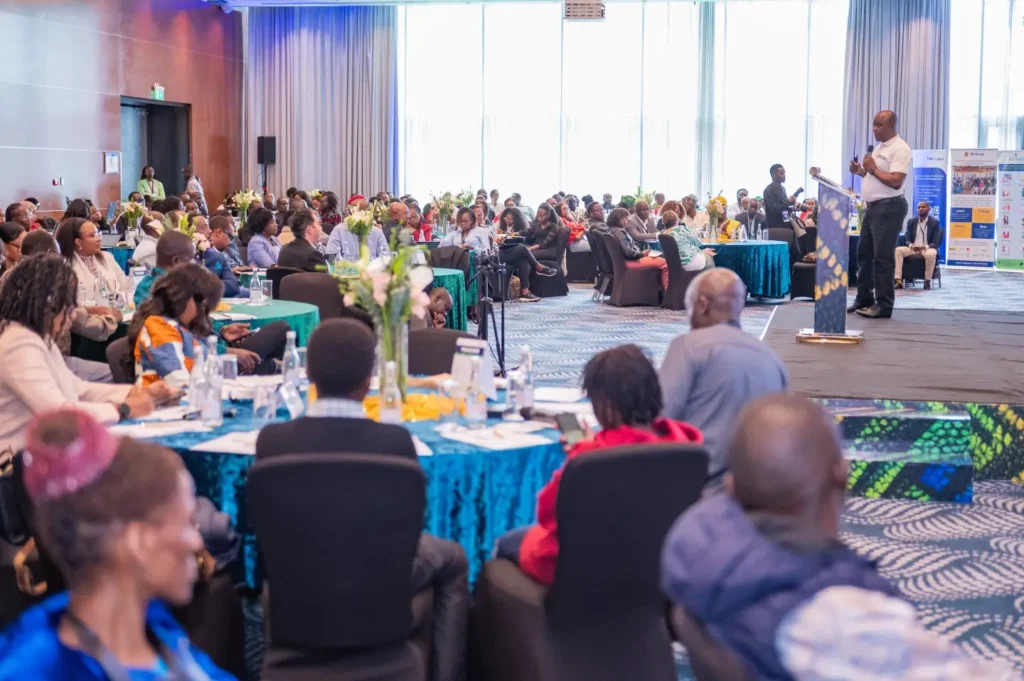
Kiminje’s presentation also focused on investor protection and due diligence.
He urged investors to ensure that the investment products they choose are legitimate and appropriately licensed by the Capital Markets Authority (CMA). But he went further, challenging them to understand the actual structure of an investment before putting money into it.
Every investor should be able to answer three basic questions: What exactly am I investing in? If something goes wrong, how do I exit the investment? And who regulates the product?
These questions matter because regulation is not a guarantee against losses. A product being regulated does not mean investors are automatically entitled to reimbursement if an investment performs poorly or fails.
Investors must therefore take responsibility for understanding the risks they are taking. This includes reading the relevant documentation, asking questions and seeking professional advice where necessary.
Planning for the future, not just the next payday
Kiminje brought the conversation back to retirement and long-term financial planning.
He reminded attendees that retirement planning should happen before retirement. People should not wait until they are approaching the end of their working lives to consider how they will sustain themselves. Pension savings represent an individual’s own money and deserve the same attention and care as any other investment.
His point was particularly important given how financially vulnerable some people become after leaving employment. Without sufficient preparation, the transition from earning a regular income to relying on accumulated savings can be difficult.
For investors building long-term wealth, he highlighted several principles: capital preservation, compounding, diversification and having a clear investment policy statement (IPS). An IPS, ideally developed with professional guidance, helps define an investor’s objectives, risk tolerance, investment mandate and approach to decision-making.
He also cautioned against treating investing as a way to show off or chasing unrealistic returns. Investors should avoid borrowing to invest, rushing into opportunities they do not understand, following market hype or ignoring red flags. Consistency and patience matter, particularly when building wealth over a long period.
Looking ahead to 2027, his advice was to define an investment mandate, assess whether one’s portfolio is adequately positioned, diversify to absorb potential shocks and keep a close eye on investments during uncertain market conditions.
One message from the keynote stayed with us: the future we want to live is best shaped when we take control of the decisions that will get us there. Becoming an investor is one way to start doing exactly that.
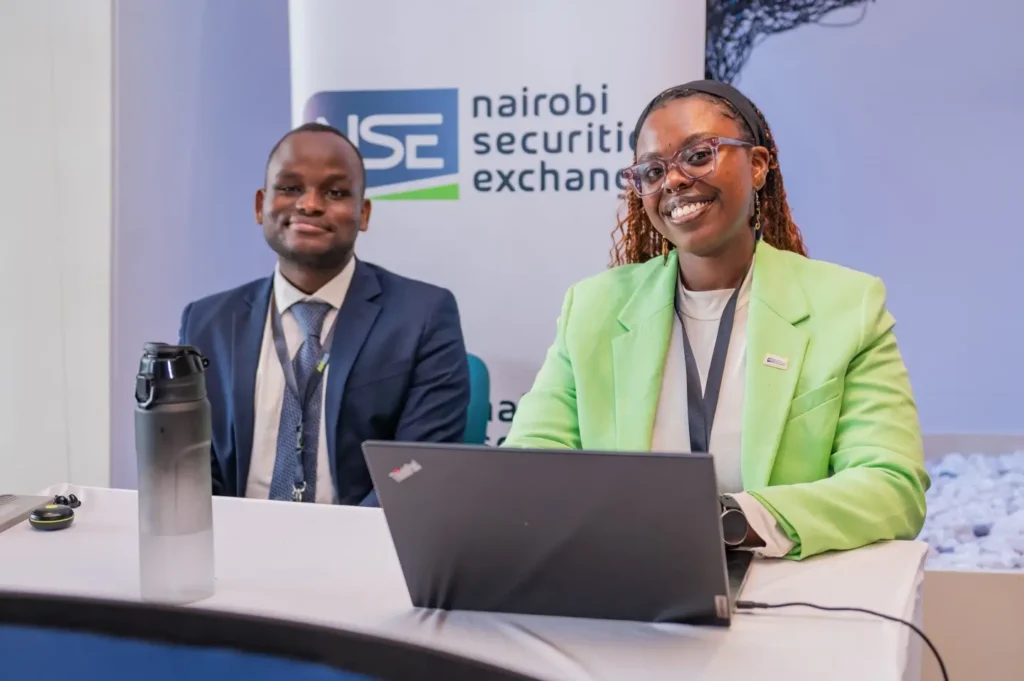
The NSE’s presence at the 6th Abojani Economic Empowerment Conference extended well beyond the keynote address. As the Anchor Sponsor, the NSE played an important role in supporting a conference built around investment knowledge, financial empowerment and long-term wealth creation. We were also honoured to recognize its Chief Executive Officer with the CEO of the Year award at the 2026 Economic Empowerment Awards.
#Consumers to Investors: Jackson Kiminje

CEO & Co-Founder, Abojani Investment
Robert Ochieng is a visionary entrepreneur and the co-founder of Abojani Investment, a leading financial education platform in Kenya that has empowered over 20,000 Africans to embark on their investment journeys. As CEO, he has demonstrated an unwavering commitment to financial literacy, successfully demystifying money and investments and making them accessible and relevant to individuals from all walks of life.
Running Thriving Investment Communities
Robert’s influence extends well beyond Abojani Investment’s core offerings. He has actively fostered a sense of community by running investment forums and groups with a vast following of over 300,000 Africans. These communities provide a safe space for individuals to exchange ideas, share experiences, and support each other on their investment journeys.
Vision for the Future
As co-founder of Abojani Investment, Robert envisions a financially empowered Africa. He strives to expand the reach of his financial education initiatives, enabling millions more to gain the knowledge and confidence needed to achieve their financial goals. His vision is to create a society where every individual has the tools and understanding to build lasting wealth and prosperity.
Professional Background
Robert Ochieng is a highly accomplished CEO at the helm of Abojani Investment, an investment and advisory firm in Kenya. He is a seasoned professional with over 14 years of experience in IT, Finance, and leadership.
His career includes key roles at prominent institutions such as Equity Bank, Gulf African Bank, Guaranty Trust Bank (GTBank) and Airtel.
Robert’s expertise has also been sought after by the National Treasury for consultancy on planning and budgeting systems, showcasing his exceptional knowledge and skills in the field. Passionate about driving meaningful conversations and collaborations between academia, industry, and the public sector, Robert actively engages in research projects focusing on digital transformation within the financial services sector. With his visionary leadership and strategic insights, Robert Ochieng continues to make a significant impact in the business world.