
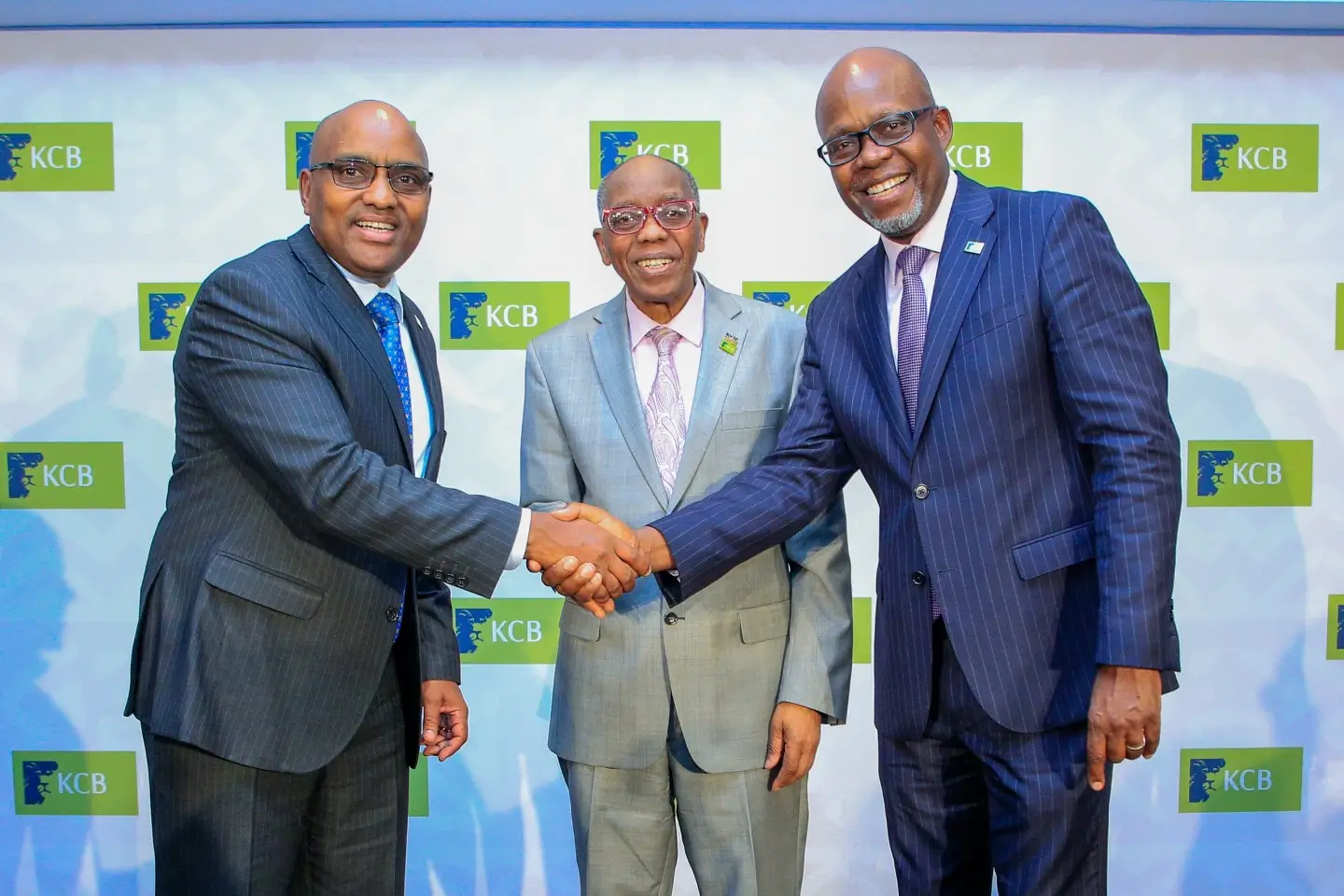
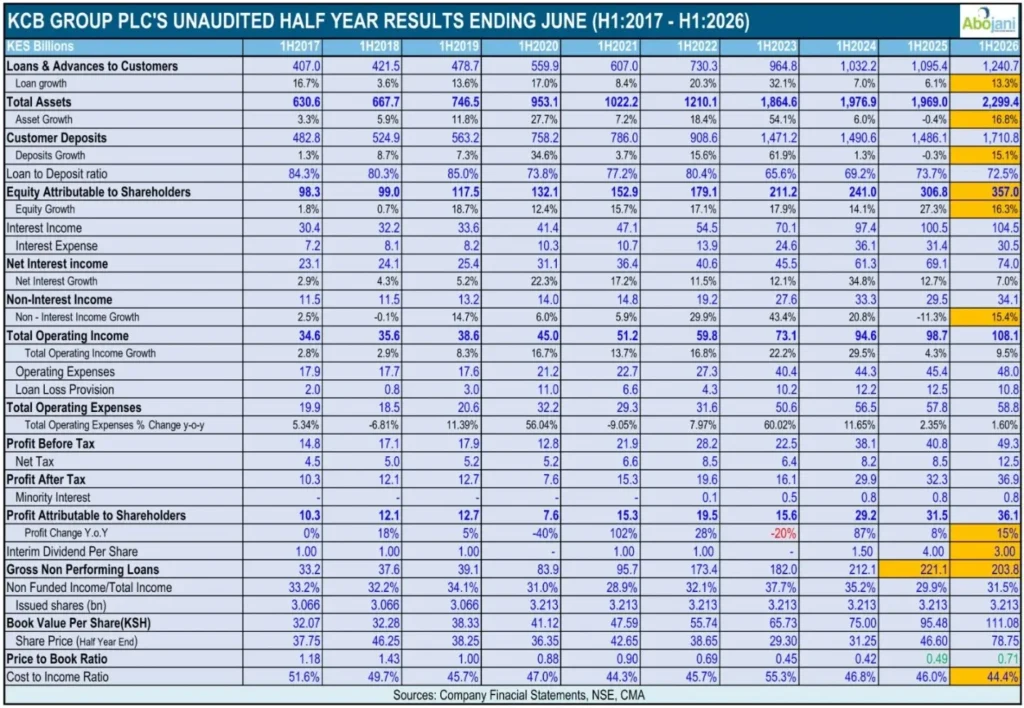
KCB Group has delivered a strong set of H1 2026 results, with the regional banking group recording a 20.8% increase in profit before tax to KSh49.3 billion as growth in both funded and non-funded income combined with lower credit impairment and disciplined cost management. The performance also came with a stronger balance sheet, improving asset quality and a 50% increase in the interim dividend to KSh3.00 per share.
The more interesting picture is the balance sheet growth while making progress on some of the issues that have weighed on its performance in recent years. Loan growth has returned strongly, non-performing loans have fallen, the cost of funding has improved and the Group’s regional operations continue to make a meaningful contribution to earnings.
Also read: KCB Retains Position as East Africa’s Strongest Bank by Capital Strength
1. Revenue growth was broad-based
KCB’s total income rose 9.5% to KSh108.1 billion in the six months to June 2026. Net interest income increased by 7% to KSh74.0 billion, while non-funded income grew by a much faster 15.4% to KSh34.1 billion.
Net fees and commissions increased by 18%, with lending fees alone rising by 30%, while foreign exchange income increased by 22% as transaction volumes grew.
At the same time, the Group managed to reduce the cost of its deposits. Interest expense fell by 5%, with the cost of funds declining from 3.9% in H1 2025 to 3.4% in H1 2026. KCB attributed this partly to the repricing of high-cost deposits.
In simple terms, KCB earned more from its business while also becoming less expensive to fund. That combination helped create room for stronger earnings.
2. A larger balance sheet
KCB’s total assets expanded by 16.8% to KSh2.3 trillion, making it one of the largest banking balance sheets in the region. Customer deposits increased by 15.1% to KSh1.7 trillion, while gross loans grew by 14.2% to KSh1.3 trillion.
The lender said the increase was driven by new-to-bank customers as well as higher lending to existing retail, SME and corporate customers.
The loan book also remains relatively diversified. Personal and household lending is the largest segment, while manufacturing, real estate, trade, construction, agriculture, transport and communications, energy and water, and other sectors all contribute to the portfolio.
3. Asset quality
The Group’s gross non-performing loan stock fell by KSh17.3 billion to KSh203.8 billion, while the NPL ratio declined from 18.7% to 15.1%. KCB attributed the improvement to recoveries, rehabilitation of distressed facilities, settlements, engagements with government on associated entities and strategic write-offs.
The investor presentation shows that the improvement has been gradual rather than a one-off movement. The Group NPL ratio fell from 19.3% in Q1 2025 to 15.1% in H1 2026, with the gross NPL stock declining from KSh233.3 billion to KSh203.8 billion over the same period.
This direction is encouraging, particularly because KCB has managed to reduce the problem loan book while simultaneously expanding lending. The Group also says the remaining NPL book is fully covered by cash provisions and collateral.
4. Wider jaws
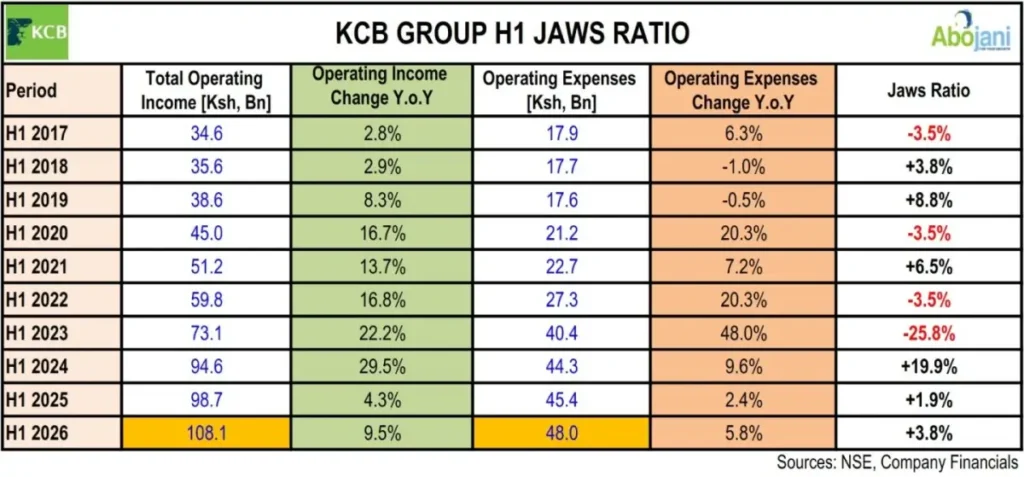
Operating expenses increased 6% to KSh48.0 billion, driven partly by higher technology investment and costs associated with expanding branches and business operations. Yet income grew considerably faster, producing positive cost jaws.
KCB’s cost-to-income ratio consequently improved from 46.0% to 44.4%.
That helped profit before tax rise by 20.8% to KSh49.3 billion, while profit after tax increased 14% to KSh36.9 billion. The slower growth in profit after tax compared with profit before tax was partly due to a 46% increase in tax expense to KSh12.5 billion.
5. The regional strategy
KCB’s regional footprint remains one of the defining features of the Group.
Operations outside KCB Bank Kenya accounted for 31.3% of Group assets, up from 30.7% a year earlier, with all of the Group’s regional banking subsidiaries recording double-digit asset growth.
More importantly, subsidiaries outside KCB Bank Kenya generated KSh15.0 billion in profit before tax, up 10% year on year. Tanzania, Uganda, South Sudan, KCB Investment Bank and Corporate Trustee Services were among the strongest contributors.
The regional contribution to Group PBT was 29.6%, compared with 32.4% in H1 2025. The lower percentage does not necessarily indicate weaker regional performance. Regional PBT actually grew 10%, but KCB Bank Kenya’s earnings grew faster, increasing the Kenyan subsidiary’s share of Group profit.
6. Digital expansion
The Group also continued to invest heavily in digital banking and technology.
KCB reported that mobile loan disbursements increased 25% to KSh314 billion during H1 2026, equivalent to approximately KSh1.7 billion a day. The Group also rolled out new mobile banking capabilities, expanded its agency banking platform across Kenya, Tanzania, Uganda and Rwanda, and launched MoFaya in Rwanda in partnership with MTN.
The technology push is not limited to customer-facing products. KCB completed the upgrade of TMB’s core banking system and rolled out a new credit workflow system across several markets, while also deploying robotic process automation to improve efficiency.
These investments will be important to watch as KCB moves beyond its current strategic plan, which runs from 2024 to 2026.
7. Shareholders payout
The results also bring good news for shareholders.
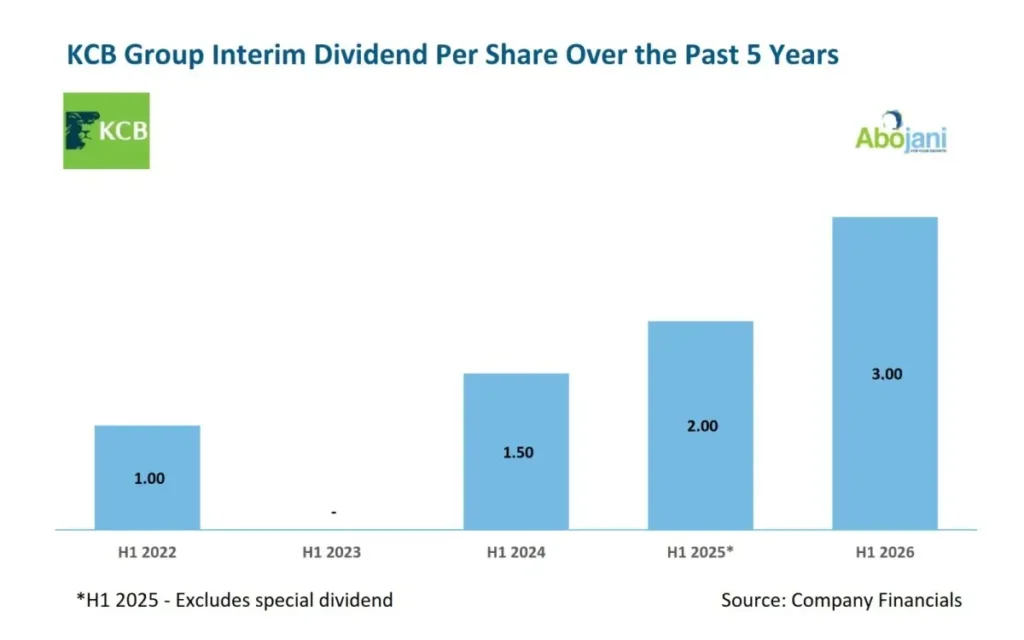
KCB’s Board approved an interim dividend of KSh3.00 per share, up 50% from KSh2.00 in 2025. The total interim dividend amounts to approximately KSh9.6 billion, with payment scheduled for around 10 November 2026 to shareholders on the register as at 2 September 2026.
The higher dividend comes alongside continued capital strength. KCB’s shareholders’ equity increased 16% to KSh357 billion, while its core capital ratio stood at 18.6%, well above the regulatory minimum.
The Group also reported a 21.1% return on equity, while a majority of its subsidiaries recorded returns above 20%.
What comes next?
KCB enters the second half of 2026 from a considerably stronger position. It has growing loans and deposits, rising non-funded income, lower funding costs, improving asset quality and a regional franchise that continues to generate significant earnings.
How will this momentum be maintained?
KCB’s current 2024–2026 strategy is in its final year, meaning the next phase of the Group’s strategy will be particularly important. With a KSh2.3 trillion balance sheet and a growing regional business, what KCB does next could have implications well beyond its own share price.
#KCB Group H1 2026
CEO & Co-Founder, Abojani Investment
Robert Ochieng is a visionary entrepreneur and the co-founder of Abojani Investment, a leading financial education platform in Kenya that has empowered over 20,000 Africans to embark on their investment journeys. As CEO, he has demonstrated an unwavering commitment to financial literacy, successfully demystifying money and investments and making them accessible and relevant to individuals from all walks of life.
Running Thriving Investment Communities
Robert’s influence extends well beyond Abojani Investment’s core offerings. He has actively fostered a sense of community by running investment forums and groups with a vast following of over 300,000 Africans. These communities provide a safe space for individuals to exchange ideas, share experiences, and support each other on their investment journeys.
Vision for the Future
As co-founder of Abojani Investment, Robert envisions a financially empowered Africa. He strives to expand the reach of his financial education initiatives, enabling millions more to gain the knowledge and confidence needed to achieve their financial goals. His vision is to create a society where every individual has the tools and understanding to build lasting wealth and prosperity.
Professional Background
Robert Ochieng is a highly accomplished CEO at the helm of Abojani Investment, an investment and advisory firm in Kenya. He is a seasoned professional with over 14 years of experience in IT, Finance, and leadership.
His career includes key roles at prominent institutions such as Equity Bank, Gulf African Bank, Guaranty Trust Bank (GTBank) and Airtel.
Robert’s expertise has also been sought after by the National Treasury for consultancy on planning and budgeting systems, showcasing his exceptional knowledge and skills in the field. Passionate about driving meaningful conversations and collaborations between academia, industry, and the public sector, Robert actively engages in research projects focusing on digital transformation within the financial services sector. With his visionary leadership and strategic insights, Robert Ochieng continues to make a significant impact in the business world.