
Business risk is often underestimated because it is not always visible in day-to-day operations. Many enterprises focus on growth, revenue, customers, and expansion, while assuming that major disruptions are unlikely or manageable when they occur. However, operational continuity can be affected by events that are sudden, severe, and financially overwhelming.
How much will it cost to repair the premises? What happens to the stock? Can the damaged equipment be replaced? What about the orders that cannot be fulfilled? How long will the business be unable to operate? And while all of this is happening, who is paying the employees, rent and other expenses?
The cost of repairing can be far greater than the cost of preparing.
Also read: Family Bank Gets Green Light for Listing on Nairobi Securities Exchange
One incident can affect much more than one asset
A fire is an obvious example.
A business is an interconnected system meaning; the building houses the equipment, the equipment enables production, the stock generates sales, the employees keep operations running, customers depend on deliveries, suppliers depend on orders being fulfilled, and revenue pays the expenses that keep the business operating.
Damage one part of that system and the effects can spread much further.
This is why insurance for a business needs to be considered in terms of the risks that could disrupt the entire operation, rather than simply the physical assets that can be seen.
With a Fire & Perils Insurance cover, you can get cover for buildings, contents, stocks, plant and machinery and other movable and immovable assets against specified perils including fire, lightning, explosion, certain natural perils, riot and strike, among others.
But replacing damaged property is only part of the problem.
What happens when the business cannot trade?
Imagine the same fire has been extinguished. The premises are being repaired and the damaged machinery needs to be replaced. But the business has stopped generating its usual revenue. The rent has not stopped and neither have salaries, loan repayments, utilities and other ongoing expenses.
This is where a business interruption or consequential loss cover becomes important. This cover is designed to compensate for profits lost following damage to insured property caused by a peril covered under the fire policy, including gross profits lost and wages paid during the period of interruption.
Sometimes the loss walks through the door
For another business owner, the crisis might begin with a burglary.
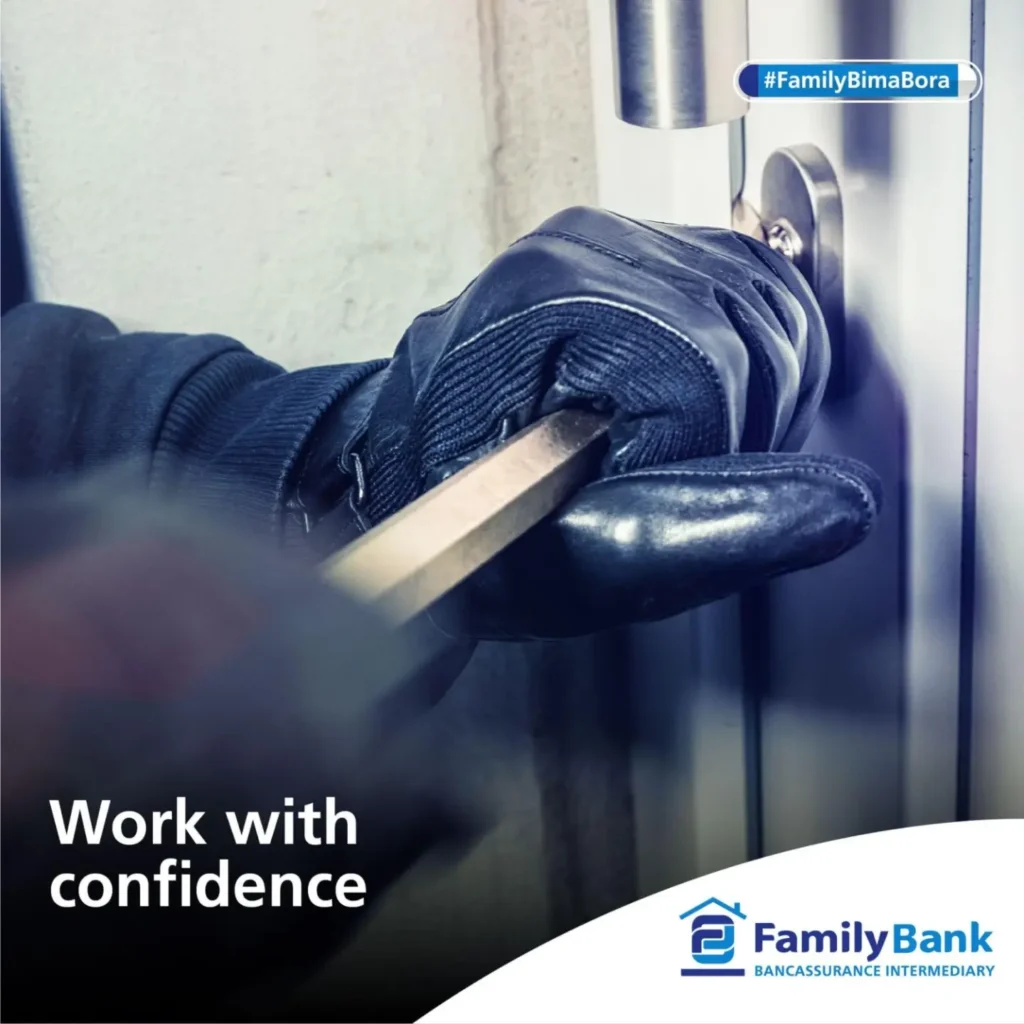
For a retailer, wholesaler or distributor, that stock represents money already spent in anticipation of future sales. Losing it can immediately create a working-capital problem.
Burglary Insurance can cover loss of or damage to insured property following forcible and violent entry into or exit from the premises, as well as certain extensions depending on the cover arranged.
For businesses that move goods, there is another exposure to consider.
Goods can be damaged, lost or stolen while being transported.
Goods in Transit insurance provides cover for loss of or damage to goods while in transit, with cover potentially extending to specified perils such as theft following an accident or hijacking, fire, accidental damage and loading and unloading, depending on the policy.
Then there are the risks you cannot see sitting on a shelf
Some of the most financially significant risks to a business do not involve its own property at all.
Consider an employee who is injured while carrying out their duties. Or a customer who suffers an injury connected to the business. Or a product supplied by a company that causes accidental injury or property damage. Or a professional client who claims that an error, omission or negligent advice caused them a loss.
These are different risks, requiring different forms of protection.
A solution like WIBA, protects employers against specified employee injuries, occupational disease or death arising in the course of employment. The business can also consider Employers’ Liability, which provides protection against legal liability arising from employee injury, illness or death where the employer faces claims based on negligence or breach of statutory duty.
Public Liability addresses another exposure: legal liability arising from accidental bodily injury or loss of or damage to property belonging to members of the public in connection with the business. Product Liability addresses legal liability arising from accidental injury or property damage caused by products supplied by the business.
For professionals, the risk can be even less tangible.
A lawyer, architect, engineer, accountant, auditor, valuer, actuary or healthcare provider does not necessarily need to damage someone’s property to face a claim. An error, omission or negligent act in the course of professional duties can result in a claim.
Professional Indemnity is designed for this type of exposure, providing indemnity for legal liabilities arising from professional negligence and related defence or settlement costs, subject to the policy terms.
Insurance is part of continuity planning
Protecting a business is not simply about protecting the building where it operates. It is also about protecting the work it does.
This is perhaps the most important reason not to treat insurance as something a business buys once and forgets about.
A construction company, for example, has an entirely different risk profile from a professional services firm. A manufacturer has different exposures from a retailer. A business importing goods has different transit risks from one selling services locally.
This is why the right question is not simply, “Does my business have insurance?”
The better questions are: What could go wrong? What would that cost? Which risks could the business absorb itself, and which could seriously threaten its ability to continue operating?
Family Bank’s Bancassurance offering covers a broad range of SME and corporate risks, from property and burglary to liability, marine, goods in transit, bonds and engineering insurance. Engineering solutions include covers such as Contractors’ All Risks, Erection All Risks, Contractors’ Plant and Machinery, Machinery Breakdown and Electronic Equipment Insurance.
The main thing is to understand the risks attached to the particular business and arrange appropriate protection around them.
Insurance cannot prevent a fire, stop a machine from breaking down, prevent goods from being damaged in transit or guarantee that a customer will never make a claim.
What it can do is transfer specified financial risks from the business to an insurer, according to the terms and limits of the policy.
That can give a business something incredibly valuable when the unexpected happens: room to recover.
Explore the insurance solutions available through Family Bank Bancassurance Intermediary and consider the risks that could have the biggest financial impact on your business: https://familybank.co.ke/?page_id=535

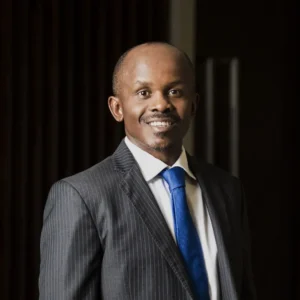
CEO & Co-Founder, Abojani Investment
Robert Ochieng is a visionary entrepreneur and the co-founder of Abojani Investment, a leading financial education platform in Kenya that has empowered over 20,000 Africans to embark on their investment journeys. As CEO, he has demonstrated an unwavering commitment to financial literacy, successfully demystifying money and investments and making them accessible and relevant to individuals from all walks of life.
Running Thriving Investment Communities
Robert’s influence extends well beyond Abojani Investment’s core offerings. He has actively fostered a sense of community by running investment forums and groups with a vast following of over 300,000 Africans. These communities provide a safe space for individuals to exchange ideas, share experiences, and support each other on their investment journeys.
Vision for the Future
As co-founder of Abojani Investment, Robert envisions a financially empowered Africa. He strives to expand the reach of his financial education initiatives, enabling millions more to gain the knowledge and confidence needed to achieve their financial goals. His vision is to create a society where every individual has the tools and understanding to build lasting wealth and prosperity.
Professional Background
Robert Ochieng is a highly accomplished CEO at the helm of Abojani Investment, an investment and advisory firm in Kenya. He is a seasoned professional with over 14 years of experience in IT, Finance, and leadership.
His career includes key roles at prominent institutions such as Equity Bank, Gulf African Bank, Guaranty Trust Bank (GTBank) and Airtel.
Robert’s expertise has also been sought after by the National Treasury for consultancy on planning and budgeting systems, showcasing his exceptional knowledge and skills in the field. Passionate about driving meaningful conversations and collaborations between academia, industry, and the public sector, Robert actively engages in research projects focusing on digital transformation within the financial services sector. With his visionary leadership and strategic insights, Robert Ochieng continues to make a significant impact in the business world.